11 Key Travel, Tourism & Hospitality Stories for Industry Leaders


From infrastructure crises to shifting consumer preferences, the travel and tourism landscape is evolving rapidly. According to Press Monitor's tracking of Canadian publications, these 11 stories capture the most critical developments for industry leaders. Stay informed with media monitoring that delivers real print intelligence.
1. Grand Canyon Flash Flood: Tragedy and Infrastructure Crisis
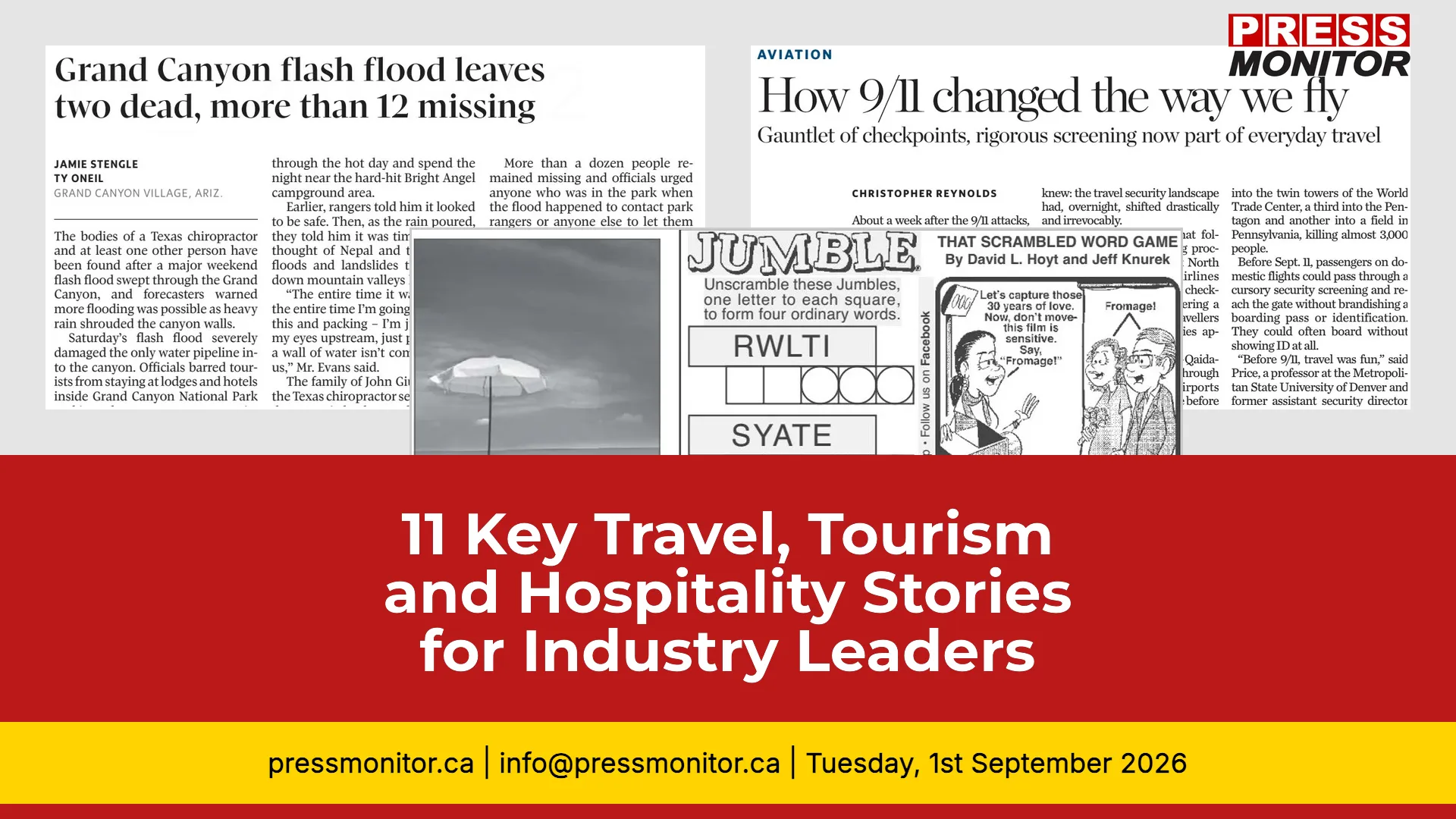
"Selon The Globe And Mail, a major weekend flash flood swept through the Grand Canyon, resulting in the deaths of a Texas chiropractor and at least one other person. Officials barred tourists from lodges and hotels, issued emergency water restrictions, and evacuated visitors due to severe damage to the only water pipeline into the canyon. More than a dozen hikers remain missing following heavy rainfall, highlighting the dangers of flash flooding in the region’s monsoon season."
Why it matters: The disaster disrupted tourism operations and raised safety concerns for visitors.
Key detail: A Texas chiropractor and at least one other died; the only water pipeline into the canyon was severely damaged; dozens of hikers remain missing.
Source: The Globe and Mail, Hamilton Spectator, The Standard, Welland Tribune.
Next step: Tourism operators should monitor such events to issue timely client advisories.
2. 9/11's Legacy: Permanent Shift in Aviation Security
Toronto Star reports that the September 11 terrorist attacks permanently transformed air travel by replacing cursory screenings with rigorous security checkpoints. The shifts affected how passengers board flights in North America and how Canadian authorities manage aviation safety.
Why it matters: The transformation of airport security continues to affect traveller experience and airline operations.
Key detail: Cursory screenings replaced by rigorous checkpoints and protocols, fundamentally changing how North America flies.
Source: Toronto Star, Hamilton Spectator.
Next step: Airlines and airports can use this history to anticipate future security trends.
3. Fresh Online Travel Deals for Canadians
«Selon The Welland Tribune,» Canadians can find freshly picked online travel deals and vacation inspiration. This article details how to get the perfect 30th-wedding-anniversary picture, mentioning a picture taken with instant replay. It also provides Jumbles to unscramble and offers an answer to a previous puzzle related to the use of instant replay on television.
Why it matters: Competitive travel deals drive consumer decisions and destination marketing.
Key detail: The article provides booking inspiration and puzzle content for discretionary travellers.
Source: The Welland Tribune, The Standard.
Next step: Hospitality marketers can monitor deal trends to adjust pricing strategies.
4. Canadians Prioritize Domestic Travel Amid Economic Concerns
Selon The Globe And Mail (ottawa/quebec Edition), Canadians are increasingly embracing the chance to explore all that country has to offer, as domestic leisure trips among Canadians are on the upswing. Research into Canadians’ leisure travel intentions for summer and fall 2O26 reinforces the ongoing appeal of made-in-Canada holidays and declining interest in trips to the United States. In its 2O26 summer travel study, market research company Leger found 77 per cent of Canadian leisure travellers intending to travel within Canada, unchanged from summer 2O25 and up eight points from summer 2O24.
Why it matters: Domestic tourism remains strong, with 77% of leisure travellers staying in Canada, boosting local economies.
Key detail: Leger's study shows this trend is unchanged from 2025, with declining interest in U.S. trips.
Source: The Globe and Mail.
Next step: Destination Canada and provincial tourism boards can double down on domestic campaigns.
5. Younger Canadians Prioritizing Travel as Lifestyle
The Globe And Mail reports that younger Canadians are prioritizing travel as a key lifestyle component, taking more leisure trips and looking for affordable ways to experience a “luxury” vacation. Research shows younger age groups are driving most of the momentum as the share of Canadians taking leisure trips continues to increase.
Why it matters: Gen Z and Millennials are driving demand for affordable luxury experiences, reshaping the hospitality industry.
Key detail: Younger age groups are taking more leisure trips and seeking budget-friendly luxury options.
Source: The Globe and Mail.
Next step: Hoteliers and tour operators can tailor packages to this demographic.
6. Marineland's Last Whales Head to U.S. Aquariums
The Globe And Mail reports that Canada’s last captive whales were set to leave the country on Monday as six belugas from Marineland were shipped to two aquariums in the United States. The closed Niagara Falls, Ont., tourist attraction is up for sale, and the park has said it is running out of money and can no longer care for its animals.
Why it matters: The closure of a major Niagara Falls attraction marks the end of an era for Canadian animal tourism.
Key detail: Six belugas were shipped to U.S. aquariums; the park is for sale and running out of funds.
Source: The Globe and Mail.
Next step: Attractions and animal welfare groups can monitor this precedent for policy changes.
7. 2026 Guide: Discover Hamilton
Hamilton Spectator reports that the Hamilton Tourism office is distributing a new visitor guide for 2026 to help tourists discover the city. Copies are available at 28 James Street North, and readers can find the online version by scanning the QR code.
Why it matters: Municipal tourism initiatives are vital for local economic development.
Key detail: The Hamilton Tourism office released a new visitor guide available in print and online.
Source: Hamilton Spectator.
Next step: Other cities can use this as a model for destination marketing.
8. Immersive Exhibition at the ROM
The Royal Ontario Museum (ROM) is presenting an immersive exhibition sponsored by Desjardins, with Alan and Patricia O'Brien R. Koval Foundation as the lead exhibition patron. The exhibition is designed by National Museums Liverpool and is part of the Toronto Star touring exhibition.
Why it matters: Cultural attractions drive tourism to major cities, boosting related sectors.
Key detail: The exhibition is sponsored by Desjardins and designed by National Museums Liverpool.
Source: Toronto Star.
Next step: Tourism boards can promote such events to attract visitors.
9. Enter to Win a Niagara Falls Getaway
The Standard (St. Catharines) reports that the Grantham Lions Club is offering a prize vacation for four people, which includes a dinner experience at StK Steak House and two nights of accommodations at the Hyatt Regeeacy Niagara Falls Fllsview.
Why it matters: Prize promotions stimulate local tourism and hospitality spending.
Key detail: The Grantham Lions Club offers a vacation for four including dinner at StK Steak House and two nights at Hyatt Regency.
Source: The Standard.
Next step: Hotels and restaurants can partner with community groups for similar initiatives.
10. $600k Needed to Restore Iconic Emily Carr House
Times Colonist reports that the owner of Emily Carr's boarding house in James Bay, Peter Willis, is asking the provincial government to restore the House of All Sorts and allow short-term rentals to raise funds. The Ministry of Tourism told the paper no money for the privately owned heritage property is coming, but documents show Carr's roof paintings are crumbling.
Why it matters: Heritage tourism contributes to cultural identity and visitor spending.
Key detail: Owner Peter Willis seeks provincial funding for the House of All Sorts; roof paintings are crumbling.
Source: Times Colonist.
Next step: Heritage advocates can use this case to push for preservation funding.
11. $90B High-Speed Rail Project Raises Cost Concerns
Ottawa Sun reports that the federal government has unveiled a high-speed rail plan, the Alto project, which involves a publicly owned federal mega-project. It aims to build a dual-track passenger network with trains traveling at three hundred kilometers per hour to cut travel times between Toronto and Quebec City in half.
Why it matters: The proposed Alto project could transform travel between Toronto and Quebec City, but budget questions loom.
Key detail: The federal plan aims for 300 km/h trains halving travel times, with public ownership.
Source: Ottawa Sun.
Next step: Transportation planners and investors should monitor cost assessments.
Which of these stories will shape your strategy? Share your thoughts below.