3 Essential Environment and Conservation Stories for Policy Leaders


Stay ahead of the curve with Press Monitor's curated press review of today's most impactful environment and conservation stories. According to Press Monitor's tracking of Canadian publications, these three stories demand your attention for informed media intelligence and strategic decision-making.
1. Catastrophic Landslide in Nepal and China
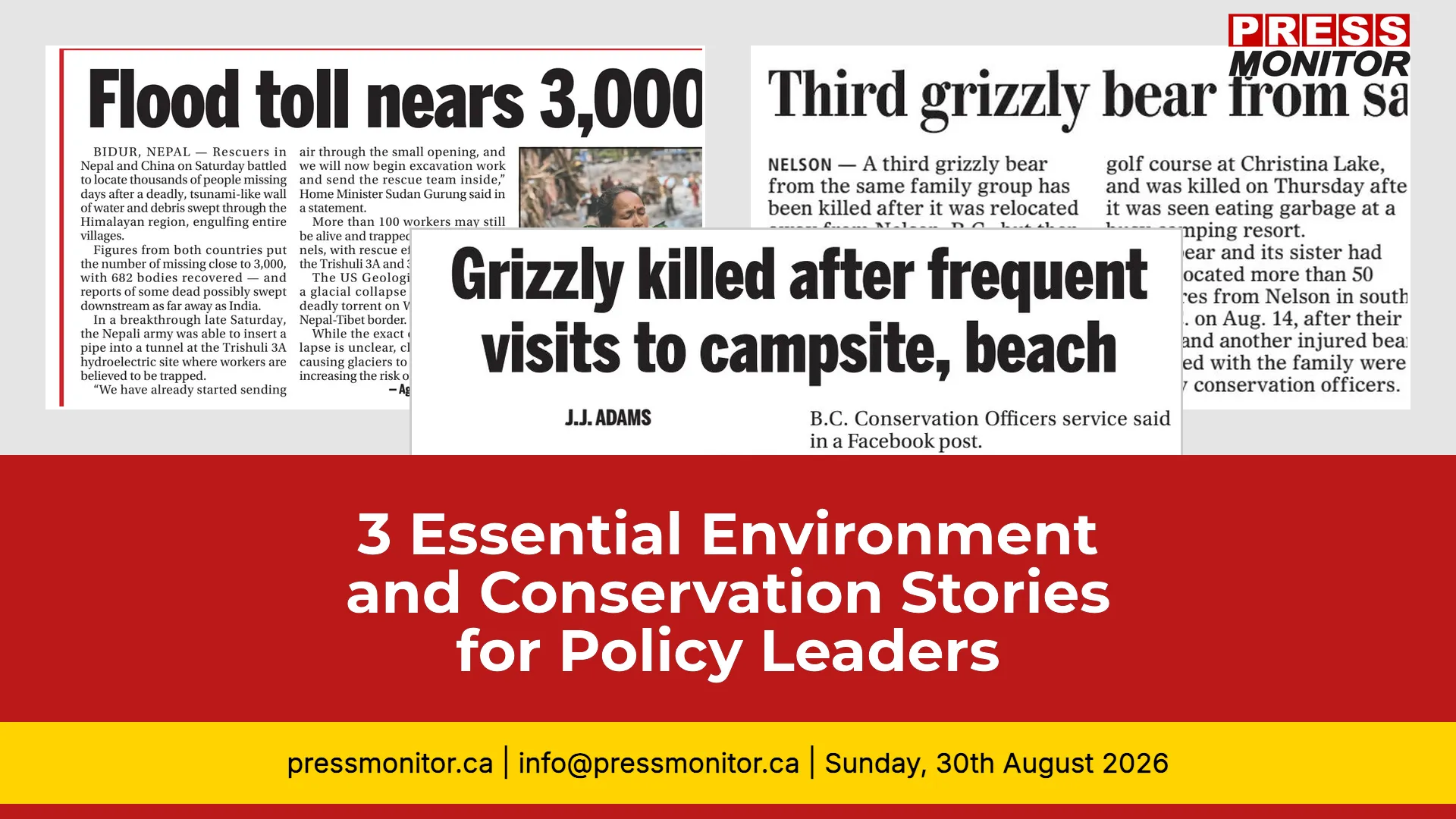
Toronto Sun reports that rescuers in Nepal and China are battling to locate thousands of people missing days after a deadly, tsunami-like wall of water and debris swept through the Himalayan region, engulfing entire villages. Figures from both countries put the number of missing close to 3,000, with 682 bodies recovered.
Why it matters: The Himalayan disaster underscores the growing risks of climate-induced geological events, with implications for international disaster response and infrastructure resilience.
Key detail: Rescuers are battling to locate thousands of people missing after a tsunami-like wall of water and debris swept through the region, engulfing entire villages. Figures from both countries put the number of missing close to 3,000, with 682 bodies recovered.
Source: Toronto Sun and Calgary Sun (cross-source coverage)
Next step: Monitor how Canadian aid agencies and policy frameworks adapt to such cross-border environmental crises.
2. Third Grizzly Bear Killed in B.C. Family Group
Times Colonist reports that a third grizzly bear from a single family group was killed after failing relocation efforts in British Columbia. The male yearling was shot at Christina Lake on Thursday after showing high comfort around people and eating garbage.
Why it matters: This incident highlights the challenges of wildlife management in areas where human and bear habitats overlap, a key issue for conservation policy and public safety.
Key detail: A third grizzly bear from a single family group was killed after failing relocation efforts. The male yearling was shot at Christina Lake after showing high comfort around people and eating garbage.
Source: Times Colonist (Canadian Press)
Next step: Review provincial wildlife relocation protocols and public education campaigns.
3. Grizzly Bear Killed Near Nelson After Repeated Returns
The Province reports that conservation officers killed a young grizzly bear on Thursday near Nelson after it repeatedly returned to residential areas. The bear had been previously relocated 50 kilometres away but continued to visit beaches, backyards, and campgrounds, posing a public safety risk.
Why it matters: This separate incident further illustrates the complexity of bear management in British Columbia, where relocation often fails and lethal measures become necessary.
Key detail: Conservation officers killed a young grizzly bear near Nelson after it repeatedly returned to residential areas. The bear had been previously relocated 50 kilometres away but continued to visit beaches, backyards, and campgrounds.
Source: The Province
Next step: Evaluate the effectiveness of non-lethal deterrents and the need for updated print media monitoring on wildlife conflict trends.
How is your organization tracking these environmental developments? Press Monitor's print media monitoring ensures you never miss a critical story.
