3 Essential Narcotics & Drugs Stories for Health Leaders


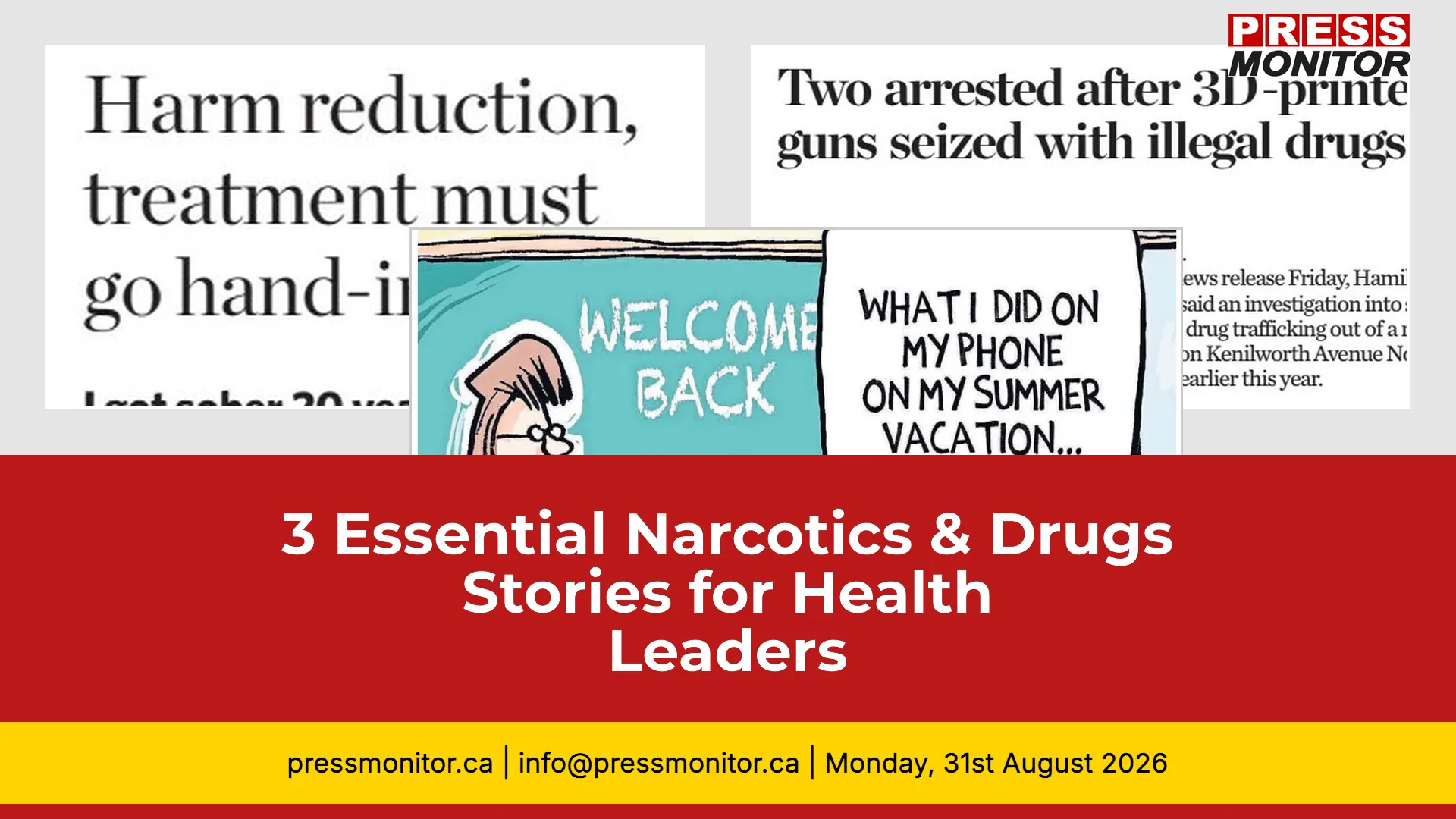
Narcotics & Drugs coverage demands precision. This press review distills today's most critical developments across Canadian print media, giving you actionable media intelligence before it hits mainstream feeds. According to Press Monitor's tracking of Canadian publications, here is what leaders need to know right now.
1. Opinion: Toronto's Approach to Street Despair
Toronto Star reports that Joey Scoleri has astute observations about the drug-poisoning crisis playing out on Toronto sidewalks and what's missing in our societal response but gets it wrong regarding what has failed and what would fix it.
Why it matters: The conversation around sidewalk drug poisoning is shifting from reactive policing to systemic care gaps.
Key detail: Columnist Joey Scoleri argues that while observations about the crisis are astute, current societal responses miss the mark on structural fixes and recovery infrastructure.
Source: Toronto Star
Next step: Audit local harm reduction partnerships and evaluate street outreach funding models.
2. 2 arrested for 3D-printed guns
The Hamilton Spectator reports that two people have been arrested after police seized illegal drugs and 3D-printed firearms from a residence on Kenilworth Avenue North. The operation was the result of an investigation into suspected drug trafficking in east Hamilton that began earlier this year.
Why it matters: The intersection of illicit drug supply chains and emerging manufacturing tech signals a new enforcement frontier.
Key detail: Hamilton Police seized illegal narcotics alongside 3D-printed firearms during an east Hamilton trafficking probe, highlighting how traditional drug investigations now intersect with digital fabrication risks.
Source: The Hamilton Spectator
Next step: Brief security and compliance teams on cross-border smuggling trends involving unregulated hardware.
3. Ontario Family Caregivers Urge Health-care Review
Toronto Star reports that the Ontario Family Caregivers' Advisory Network is calling for a revisit of the health-care system's approach to patient autonomy. The organization emphasizes the need for better support in recognizing impaired capacity to protect vulnerable patients with mental illness and substance-use issues.
Why it matters: Patient autonomy frameworks are under scrutiny as substance-use disorders complicate clinical decision-making.
Key detail: The Ontario Family Caregivers' Advisory Network is pushing for a formal health-care system review to better protect vulnerable patients with mental illness and substance-use issues, emphasizing impaired capacity recognition protocols.
Source: Toronto Star
Next step: Align internal patient advocacy policies with emerging provincial guidance on cognitive impairment and consent.
This print media monitoring roundup captures the pulse of Canadian drug policy, enforcement, and care reform. How is your organization adapting to these overlapping crises? Share your operational adjustments below.
