3 Essential Robotics and Automation Stories for Industry Leaders


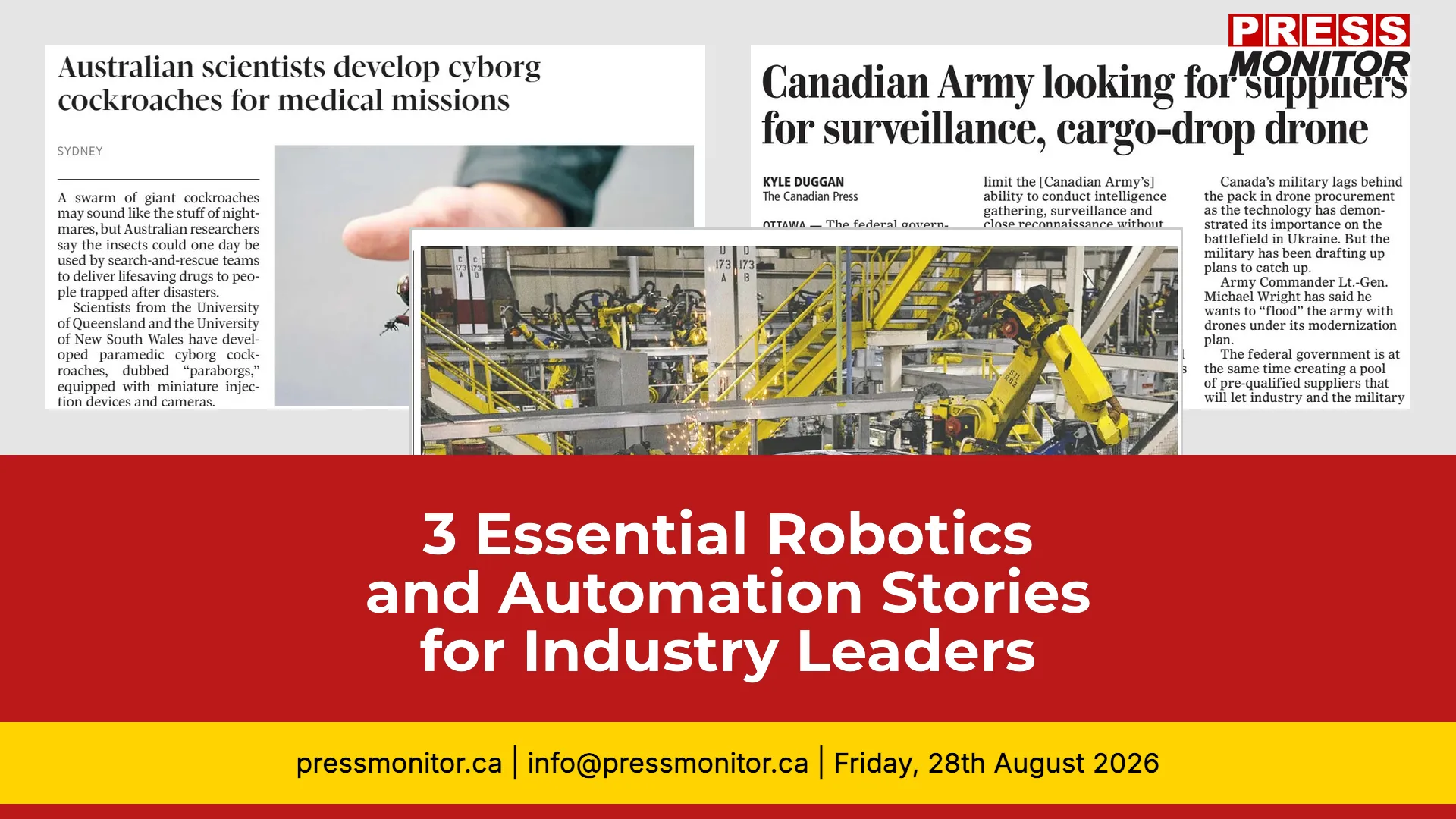
Stay ahead of the curve with this press review of the latest news on robotics and automation from Canadian print media. According to Press Monitor's tracking of Canadian publications, three stories stand out today. This media monitoring roundup brings you the essential developments.
1. Cyborg Cockroaches for Disaster Medical Missions
The Globe And Mail reports that Australian researchers have developed cyborg cockroaches, dubbed 'paraborgs,' equipped with miniature injection devices and cameras to deliver lifesaving drugs to people trapped after disasters.
Why it matters: Researchers have developed 'paraborgs' – cyborg cockroaches equipped with miniature injection devices and cameras – to deliver lifesaving drugs to people trapped after disasters. This breakthrough could revolutionize emergency medical response in inaccessible areas.
Key detail: The insects are controlled remotely and can navigate rubble. The Globe and Mail reports on the Australian study.
Source: The Globe and Mail (Ottawa/Quebec Edition)
Next step: Monitor how this technology progresses toward field trials.
2. Canadian Army Seeks Drone Suppliers
The Canadian Army is looking for suppliers for surveillance and cargo-drop drones under its Minerva initiative. It aims to integrate drones into its operations, highlighting the need for drones in complex and dangerous battlespaces. The procurement lags behind other countries, but plans are underway to modernize with a focus on domestic production.
Why it matters: The Canadian Army's Minerva initiative aims to integrate surveillance and cargo-drop drones into operations, addressing a lag in military drone adoption compared to other nations.
Key detail: The procurement focuses on domestic production to modernize the forces. Reported by Kyle Duggan in the Times Colonist.
Source: Times Colonist
Next step: Track the tender process and supplier announcements.
3. Robotics and Job Impacts at Stellantis Windsor Plant
Vancouver Sun reports that robots weld a frame at the Stellantis Windsor Assembly Plant. Moving Canadian production to the U.S would take years and cost billions of dollars in investment, resulting in thousands of job losses, a Windsor professor says.
Why it matters: Robots welding frames at the Stellantis Windsor Assembly Plant symbolize the automation shift. A Windsor professor warns that moving Canadian production to the U.S. would cost billions and thousands of jobs.
Key detail: The story, covered by both the Calgary Herald and Vancouver Sun, highlights the tension between robotics and employment.
Source: Calgary Herald, Vancouver Sun
Next step: Assess the implications for your workforce and supply chain.
Closing question: How is your organization preparing for the automation wave? Share your thoughts below.