3 Essential Timber, Lumber & Wood Products Stories for Canadian Forestry Pros


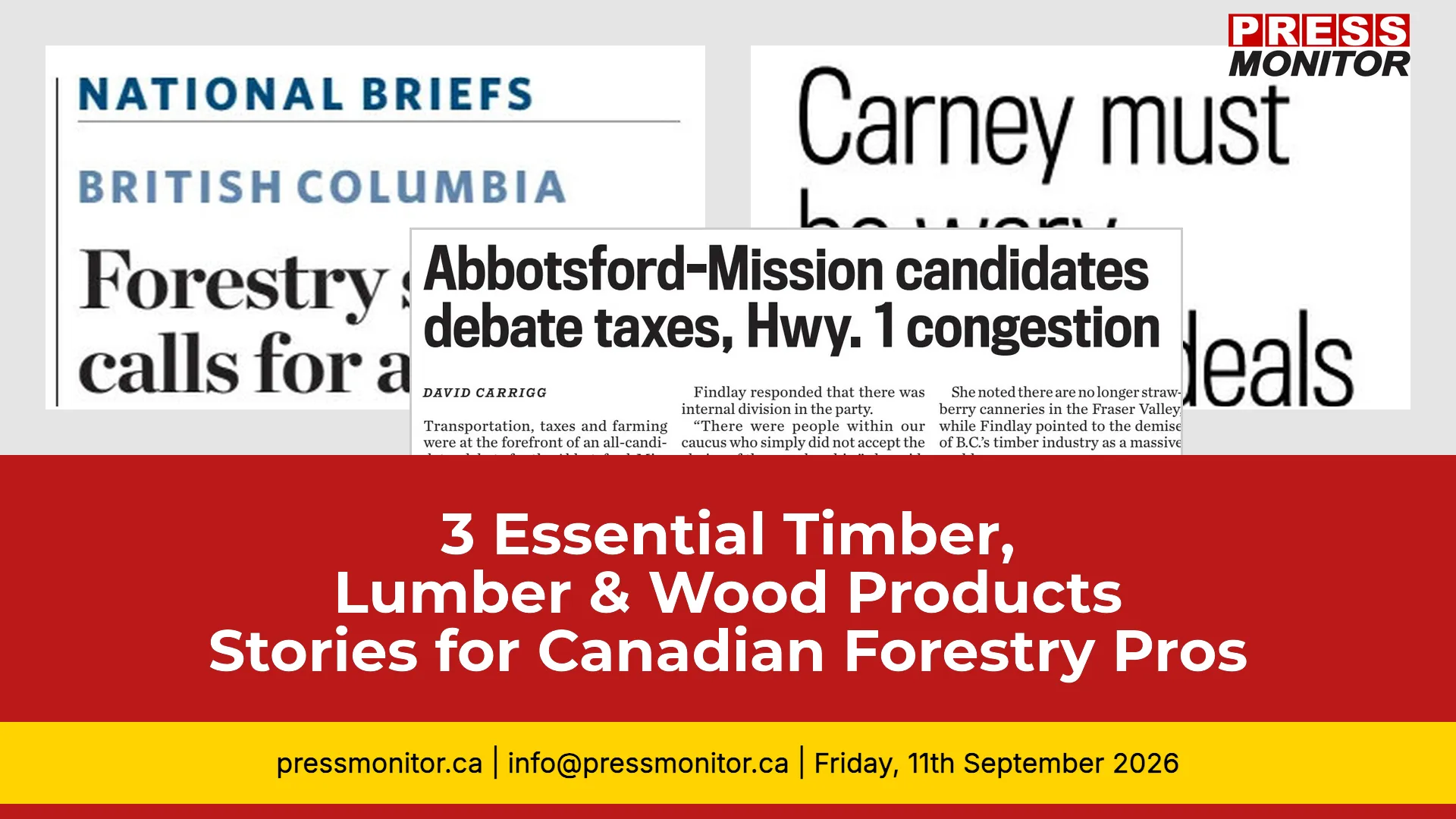
According to Press Monitor's media monitoring of Canadian publications, this press review delivers media intelligence on the day's most consequential developments in timber, lumber, and wood products. From forestry crisis letters to counter-tariffs reshaping the supply chain, these stories define the sector's immediate future. This print media monitoring report covers three essential stories for industry stakeholders.
1. BC Forestry Groups Demand Crisis Action
The Welland Tribune reports that British Columbia forestry groups have written to Premier David Eby saying the industry is at a breaking point and calling for urgent action to address challenges ranging from provincial permitting delays to U.S. tariffs. The letter is co-authored by groups representing contractors, manufacturers, unions and others dependent on forestry, including the BC Council of Forest Industries, BC First Nations Forestry Council and the Truck Loggers Association. The letter asks Eby to take swift action to form a crisis group with a mandate to cut costs, remove regulatory barriers and get economically viable wood moving.
British Columbia's forestry sector is at a breaking point, and industry groups are turning to the provincial government for urgent help. This story matters because the supply chain for Canadian timber and lumber depends on swift regulatory action and cost reduction.
Key detail: The letter, co-authored by the BC Council of Forest Industries, BC First Nations Forestry Council, and Truck Loggers Association, calls on Premier David Eby to form a crisis group with a mandate to cut costs, remove regulatory barriers, and get economically viable wood moving.
Source: The Welland Tribune, September 11, 2026
Next step: Watch for Eby's response and any emergency cabinet meeting announcements. Tag Premier Eby in your comments: what would you prioritize first?
2. Canada's Counter-Tariffs Hit Softwood and More
Cape Breton Post reports that Canada's counter-tariffs took effect at twelve a.m. Tuesday, imposing tariffs of twenty-five to fifty percent on United States goods including dairy products, cosmetics, hair care, softwood, steel rods, and window frames. United States President Donald Trump threatened to ban aerospace company Bombardier from selling aircraft in the United States. Prime Minister Mark Carney delivered a national address on his YouTube channel discussing Canada-United States trade relations and economic diversification.
Canada's retaliatory tariffs of 25 to 50 percent on US goods — including softwood — directly impact the timber and lumber trade relationship between the two countries. This development reshapes the wood products supply chain overnight and affects every stakeholder from sawmill operators to exporters.
Key detail: The tariffs took effect at midnight Tuesday, targeting dairy products, cosmetics, hair care, softwood, steel rods, and window frames. Meanwhile, US President Donald Trump threatened to ban Bombardier from selling aircraft in the United States, escalating the trade dispute further.
Source: Cape Breton Post, September 11, 2026
Next step: Monitor US-Canada trade negotiations and potential escalation. Prime Minister Mark Carney's national address on economic diversification is a key signal to watch. Tag Bombardier and Carney: how will your business adapt?
3. Abbotsford-Mission Candidates Address Tax Policy
Vancouver Sun reports that candidates in the Abbotsford-Mission byelection debated taxes, Highway 1 congestion, and farming issues on Wednesday evening. Kerry-Lynne Findlay, Pam Alexis, Lakhwinder Jhaj, and Stephen Fowler discussed provincial tax policy and economic concerns ahead of the September 26 vote. Advance voting runs from September 18 to September 23.
With the September 26 byelection approaching, candidates in Abbotsford-Mission are debating taxes, Highway 1 congestion, and farming issues — all of which affect forestry and wood products operations in the Fraser Valley region. This story matters for local timber businesses watching policy shifts.
Key detail: Kerry-Lynne Findlay, Pam Alexis, Lakhwinder Jhaj, and Stephen Fowler discussed provincial tax policy and economic concerns. Advance voting runs from September 18 to September 23.
Source: Vancouver Sun, September 11, 2026
Next step: Track which candidate's tax platform could impact forestry businesses in the region. Tag Findlay and Alexis: which tax policy would benefit your operations most?
Which of these developments will have the greatest impact on the Canadian timber and lumber sector? Follow Press Monitor for ongoing news on timber, lumber, and wood products as this story develops.