3 Essential Water & Wastewater Stories for Industry Leaders


Water and wastewater management is at the intersection of environmental policy, public health, and corporate strategy. According to Press Monitor's tracking of Canadian publications, three stories this week highlight the growing pressures on water resources. This media monitoring roundup from Canada's leading print sources provides essential context for industry leaders.
1. AI's Water and Energy Demand Surge
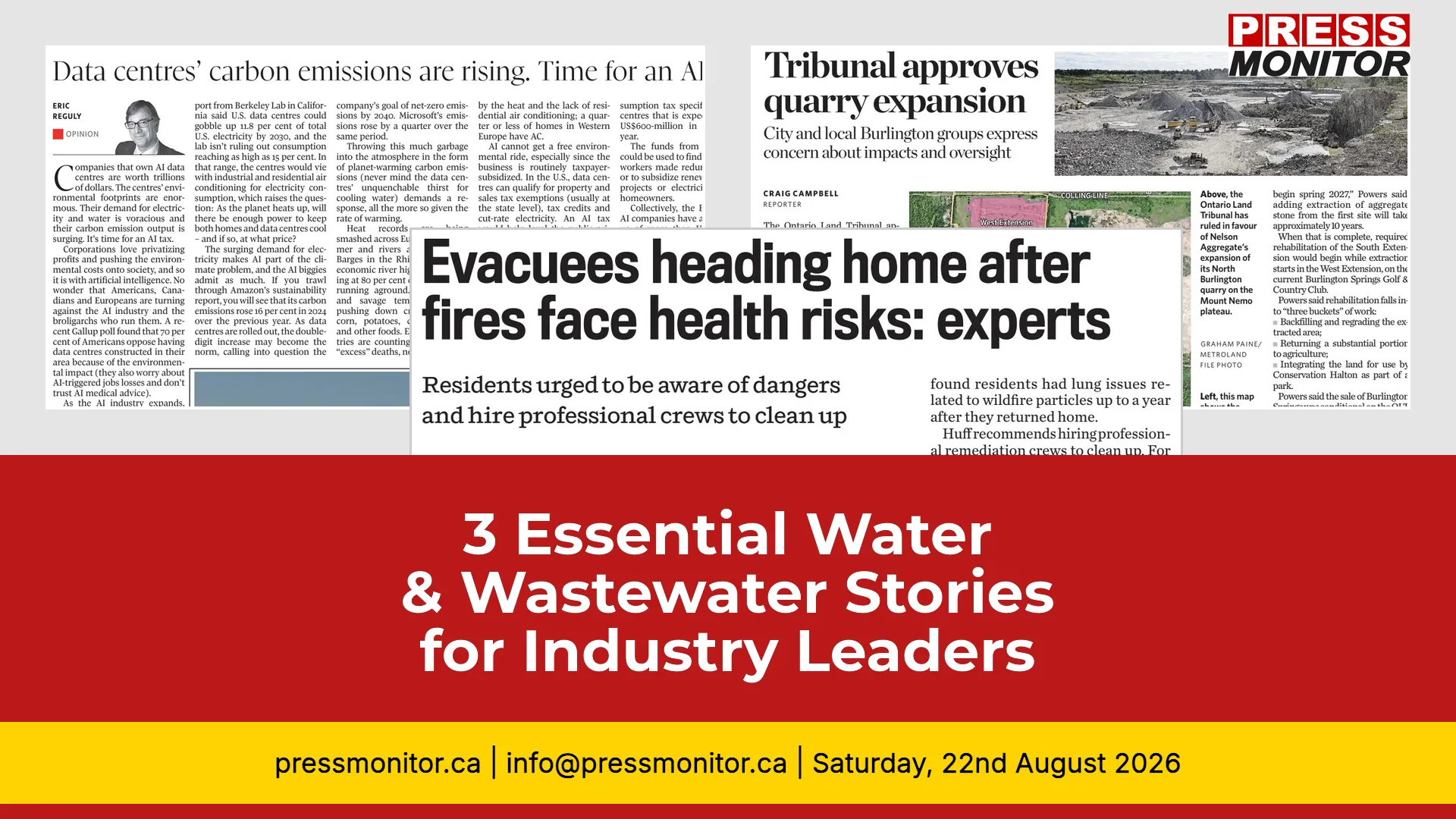
A front-page report in The Globe And Mail reports that data centres’ carbon emissions are rising, driven by surging electricity and water demand, fueling public opposition and calls for an AI tax. Companies like Amazon and Microsoft have seen significant increases in emissions, undermining net-zero goals. Proposed AI taxes aim to address environmental costs, with funds directed toward renewable energy or displaced workers.
Why it matters: Data centres' rising water consumption threatens local supplies and fuels public opposition.
Key detail: A front-page report in The Globe and Mail notes that Amazon and Microsoft have seen significant emissions increases, with water demand driving calls for an AI tax.
Source: The Globe and Mail (Ottawa/Quebec Edition), August 22, 2026.
Next step: Water utility directors should monitor data centre expansion plans in their regions.
2. Quarry Expansion Raises Water Resource Concerns
The Ontario Land Tribunal has approved the expansion of Nelson Aggregate’s north Burlington quarry over objections from the City of Burlington and local environmental groups. Both the city and Conserving Our Rural Ecosystems Burlington (CORE) say they are disappointed in the OLT’s interim order and are reviewing the full 130-page document for its implications and to determine any potential next steps. The decision raises questions about reliance on provincial oversight of future aggregate extraction, according to CORE and Protecting Escarpment Rural Land (PERL).
Why it matters: The Ontario Land Tribunal approved Nelson Aggregate's quarry expansion despite city and environmental group objections, raising questions about groundwater protection.
Key detail: The City of Burlington and groups CORE and PERL are reviewing the 130-page decision.
Source: The Hamilton Spectator, August 22, 2026.
Next step: Municipal planners should assess the impact on local water tables.
3. Post-Wildfire Drinking Water Risks
Vancouver Sun reports that as many B.C. residents return home after recent wildfires tore through their communities, experts urge caution because smoke damage, ash, spoiled food and crops, chemical or gas leaks, as well as unclean drinking water all pose serious health risks.
Why it matters: Returning evacuees face health risks from contaminated drinking water due to smoke, ash, and chemical leaks.
Key detail: Experts warn that unclean drinking water poses serious health risks after wildfires.
Source: Vancouver Sun, August 22, 2026.
Next step: Public health officials should prioritize water testing in affected areas.
These stories underscore the need for comprehensive print media monitoring to stay ahead of water-related developments. Which of these issues impacts your organization most? Share your thoughts.