3 Key Agriculture and Farming Stories for Agribusiness Leaders


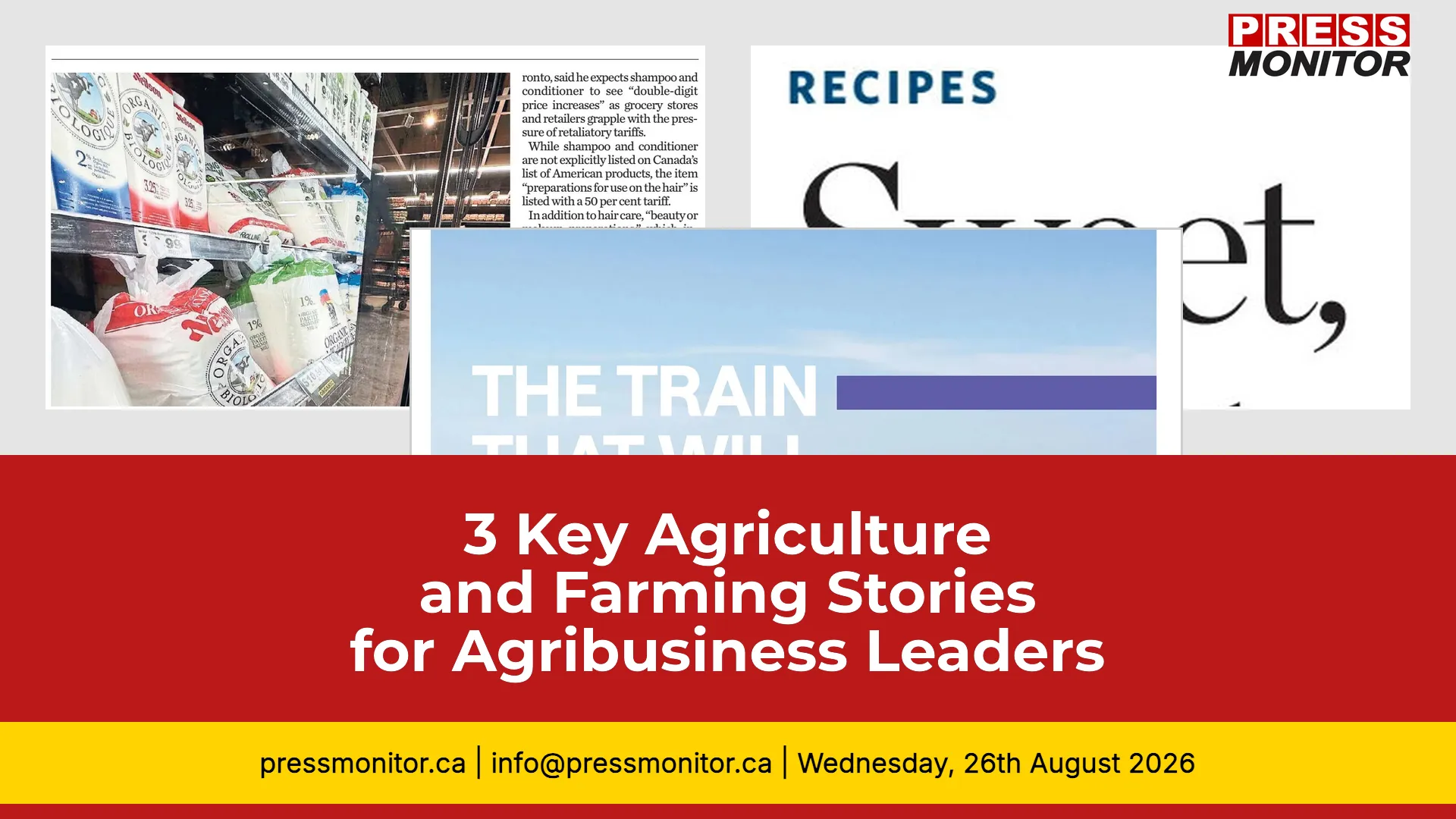
Stay ahead with the latest news on agriculture and farming. According to Press Monitor's tracking of Canadian publications, today's top stories cover Canada's retaliatory tariffs impacting the dairy and seafood sectors, the unique flavor of organic corn varieties, and new government programs supporting the next generation of farmers. This media monitoring roundup helps you navigate the shifting landscape of Canadian agriculture.
1. Canada's $27.6B Tariff Retaliation Hits Agriculture
"Selon The Star, Canada has announced a series of counter-tariffs targeting goods from the United States, including milk, cheese, fish, smartphones, shampoo, washing machines, and construction materials. The move is aimed at addressing the ongoing cost-of-living crisis and protecting domestic dairy and seafood industries, though experts warn that these measures could lead to increased consumer prices. Consumers may face higher costs for a variety of goods, with some products potentially becoming less readily available due to limited supply options."
Why it matters: The Canadian government imposed counter-tariffs on US goods including milk, cheese, and fish, directly affecting the dairy and seafood industries. This escalates trade tensions and could raise consumer prices.
Key detail: The tariff package targets $27.6 billion in US goods, with agricultural equipment also included. Experts warn that consumers may face higher costs and limited supply.
Source: Toronto Star, with additional coverage from Calgary Sun and Ottawa Sun (tracked by Press Monitor).
Next step: Agribusiness leaders should assess supply chain impacts and consider domestic sourcing alternatives.
2. Fresh Corn's Unique Flavor Highlights Organic Varieties
"Selon The Welland Tribune, the first time I picked sweet corn was on a friend’s farm in Wisconsin. It was at least 8O degrees the morning we spent hours snapping the ears off their tall stalks to fill sacks slung over our shoulders. ’d never eaten raw corn before, nor had I slugged icy cold water pumped into a tin cup. The experi- ence was a revelation. Truly fresh, organic corn is intense and complex, nutty, mildly sweet and creamy. It relies on wind and insects for pollination, and produces what the French call terroir, a taste of place shaped by the sun, rain and rich soil. Its completely different from commercial corn, which is bred to be sugary sweet and simple. Because corn is the highest-risk crop for GMO contamination, organic varieties like ‘Who Gets Kissed’, ‘Golden Bantam’, and ‘Country Gentleman’ can be hard to find. Look for them at local farmers markets and coops. With corn so delicate and fresh, the best way to cook it is hardly at all. The simplest method is to dump shucked cobs into a pot of rapidly boiling salted water, turn off the heat and allow the corn to sit until bright and plump, about 3 to 5 minutes. Then remove, set the cobs on a clean dish towel or paper towel to fully drain and serve with plenty of butter."
Why it matters: Organic corn varieties offer complex flavors and terroir, but are harder to find due to GMO contamination risks. This story underscores the value of local farmers markets and coop sourcing.
Key detail: Varieties like 'Who Gets Kissed' and 'Golden Bantam' are recommended for their nutty, creamy taste. The best cooking method is minimal heat.
Source: The Welland Tribune.
Next step: Consider adding organic corn to your product lineup or menu to differentiate and meet consumer demand for authentic local food.
3. Opportunities and Support Programs for Agriculture
The Toronto Star reports that initiatives are being created to improve agricultural productivity, promote innovation, help preserve farmland, and support the next generation of farmers.
Why it matters: New initiatives aim to improve productivity, promote innovation, preserve farmland, and support the next generation of farmers. This is crucial for long-term sustainability.
Key detail: Programs focus on farmland preservation, innovation grants, and training for young farmers.
Source: Toronto Star.
Next step: Explore available government programs to secure funding for your farm or agribusiness expansion.
What do you think? How will Canada's tariff retaliation affect your agribusiness? Share your thoughts in the comments.