3 Key Commercial Shipping and Ports Stories for Maritime Leaders


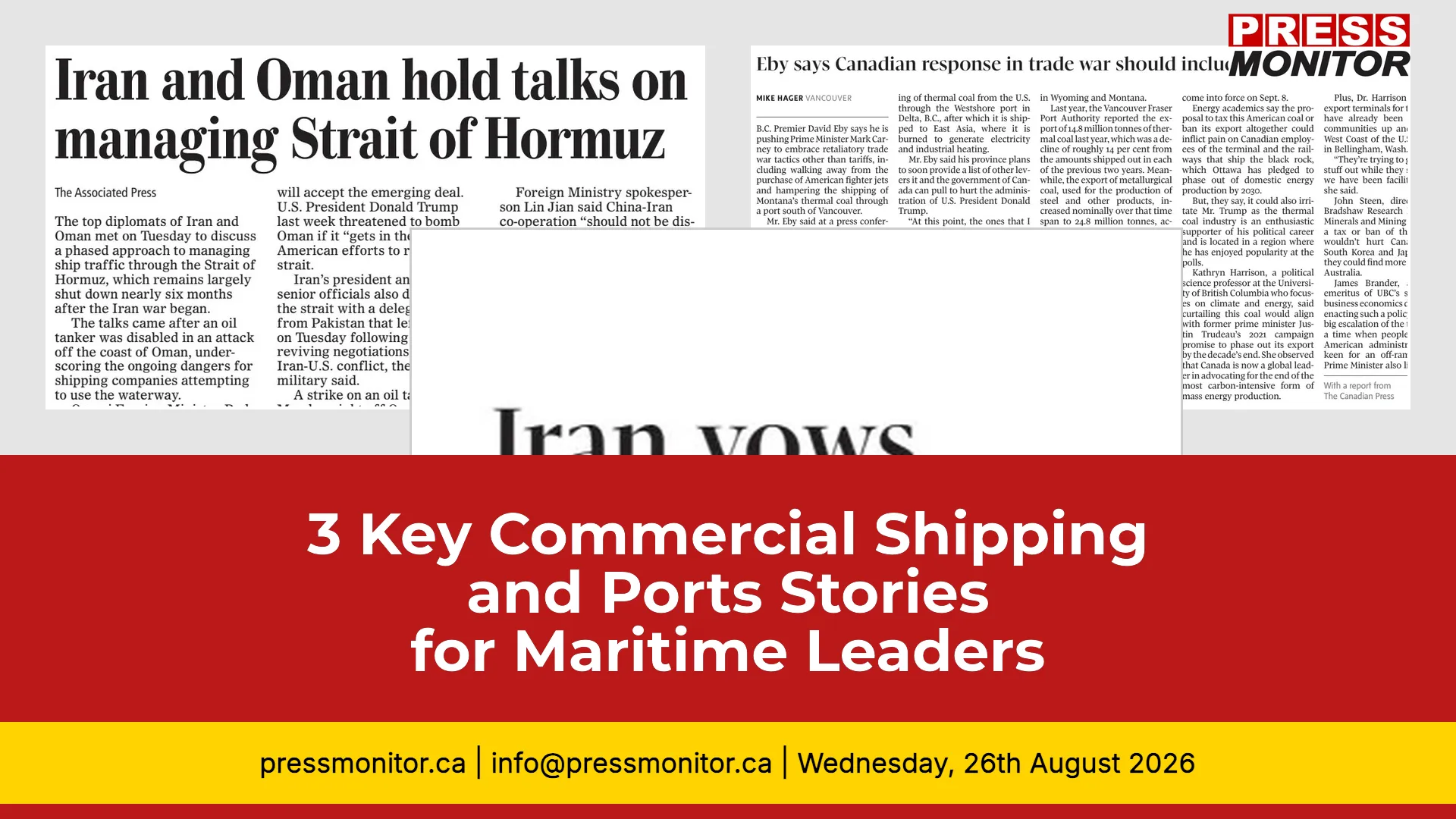
According to Press Monitor's tracking of Canadian publications, today's print media monitoring reveals critical developments in commercial shipping and ports. From diplomatic talks to trade war tactics, here are three stories that demand your attention.
1. Iran and Oman Discuss Strait of Hormuz Management
The top diplomats of Iran and Oman met to discuss a phased approach to managing ship traffic through the Strait of Hormuz, which remains largely shut down after the Iran war began. The proposed framework includes a joint temporary navigational corridor and both countries working to clear mines from the waterway.
Why it matters: The Strait of Hormuz is a vital chokepoint for global oil and LNG shipments. Talks suggest a potential de-escalation that could reopen the strait.
Key detail: The proposed framework includes a joint temporary navigational corridor and mine clearance operations.
Source: Times Colonist, citing multiple outlets including Toronto Star and The Standard.
Next step: Monitor for phased implementation; shipping lines should prepare contingency plans.
2. Eby Advocates Non-Tariff Measures in Canadian Trade War Response
The Globe And Mail reports that B.C. Premier David Eby is urging Prime Minister Mark Carney to employ retaliatory trade war tactics beyond tariffs, including halting the purchase of American fighter jets and disrupting the shipping of Montana’s thermal coal through a port south of Vancouver.
Why it matters: B.C. Premier David Eby's proposal to halt shipping of Montana's thermal coal through a Vancouver-area port directly impacts bulk carrier operations and cross-border trade.
Key detail: Eby urges PM Carney to use non-tariff measures including halting American fighter jet purchases and disrupting coal shipments.
Source: The Globe and Mail, by Mike Hager.
Next step: Port operators and shipping lines should assess potential disruptions to coal exports.
3. New Sanctions and Iran’s U.S. Diplomacy Standoff
{The Globe And Mail} reports that Iran vowed to retaliate against recently expanded U.S. sanctions, framing the measures as pressure campaigns targeting trading partners—while U.S. Treasury Secretary Scott Bessent launched them but refrained from labeled harsher penalties. Key tensions included Iranian warnings that trading entities could risk exclusion from U.S. dollars, while Pakistan facilitated palace-to-palace diplomatic discussions to revive stalled U.S.-Iran peacemaking processes, downplayed sanctions risks under encompassing negotiations. Actor discussions around enforcing regional cooperation stalled, however; China defended 'complying to international law,' prompting minimal oil price disruption strictly steering off Iran’s tactical shipping disruptions
Why it matters: Expanded U.S. sanctions on Iran threaten to disrupt shipping and trade financing, with Iranian warnings of exclusion from U.S. dollar transactions.
Key detail: Iran vowed retaliation while Pakistan facilitated diplomatic backchannels. China defended compliance with international law.
Source: The Globe and Mail, by Yasmine Ghania and David Lawder.
Next step: Shipping companies should review sanctions compliance and potential impacts on chartering.
4. Climate Inaction Costs Global Economies
The Standard (st. Catharines) reports that intense heat and drought are causing severe economic disruptions, including stalled shipping on European rivers and threats to nuclear power stations. The author argues that prioritizing short-term economic gain over climate action has created a long-term financial crisis driven by the fossil fuel industry and political negligence.
Why it matters: Heat and drought are stalling shipping on European rivers, threatening nuclear power and supply chains.
Key detail: The author argues short-term economic gain over climate action has created a financial crisis.
Source: The Standard (St. Catharines), by Wayne Poole.
Next step: Consider climate risk in supply chain planning; inland waterway shipping may face increasing disruptions.
This press review is powered by Press Monitor (pressmonitor.ca), Canada's 360° media intelligence platform. Which of these stories will impact your operations? Share your thoughts below.