3 Key Drug-Related Stories for Public Safety Officials


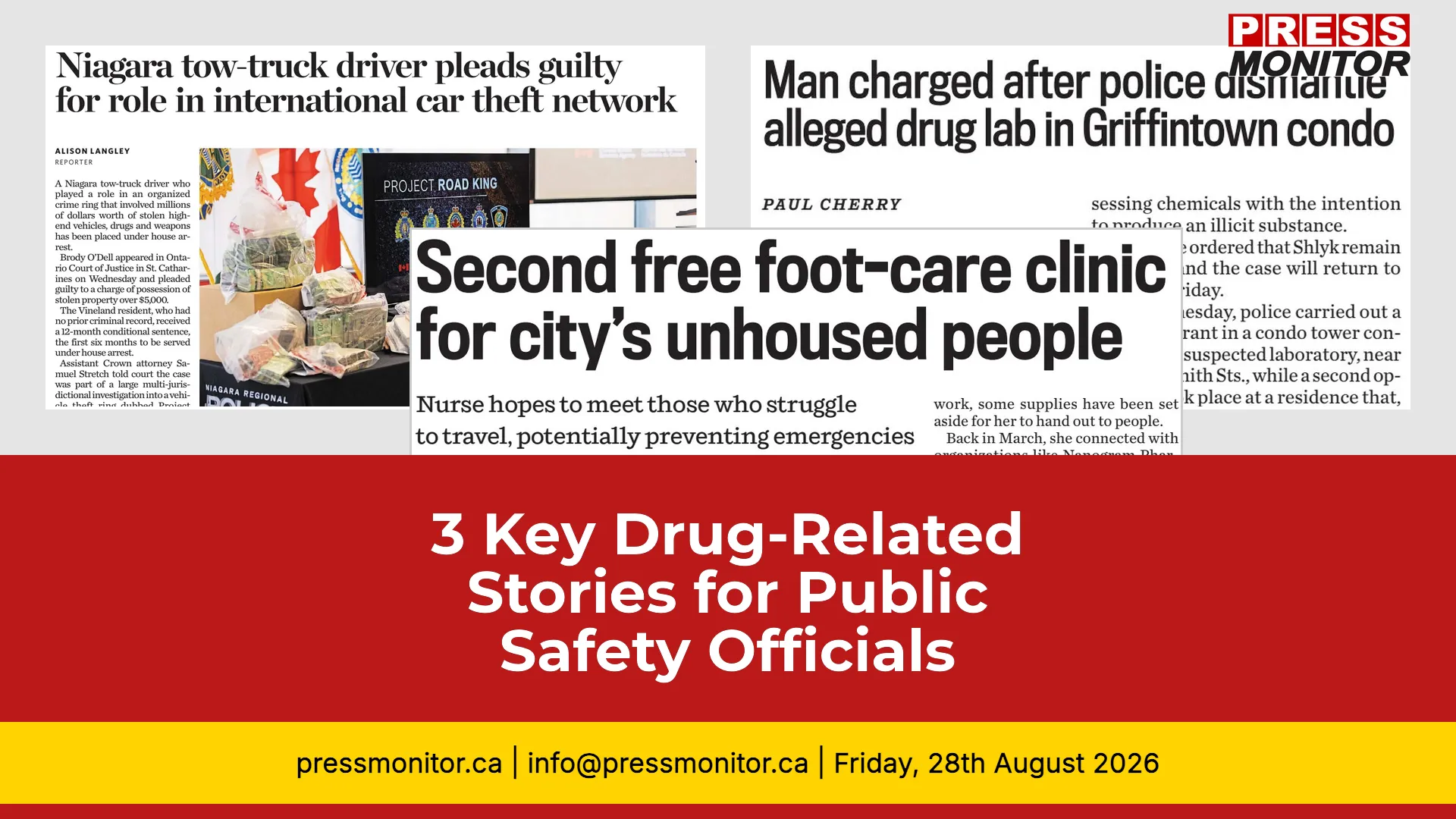
According to Press Monitor's tracking of Canadian publications, these three stories highlight critical developments in drug enforcement and public health. This media monitoring roundup covers a major lab bust, an organized crime guilty plea, and a community harm reduction initiative.
1. Tow Truck Driver Pleads Guilty in Organized Crime Ring
The Standard (st. Catharines) reports that a Niagara tow-truck driver who played a role in an organized crime ring that involved millions of dollars worth of stolen highend vehicles, drugs and weapons has been placed under house arrest.
Why it matters: This case reveals the intersection of vehicle theft, drug trafficking, and organized crime in the Niagara region. It underscores the need for coordinated law enforcement and print media monitoring to track cross-border criminal networks.
Key detail: The driver was involved in a ring that stole high-end vehicles worth millions, also linked to drugs and weapons. He received house arrest.
Source: The Standard (St. Catharines) and The Welland Tribune (cross-source: 2)
Next step: Public safety officials should review regional task force coordination and consider enhanced monitoring of tow-truck licensing.
2. Kastus Shlyk Charged in Drug Lab Bust
Montreal Gazette reports that Kastus Shlyk, 35, was charged after police dismantled an alleged carfentanil laboratory in a Griffintown condominium. The operation took place Wednesday near Peel and Smith Streets and included a search of Shlyk's residence.
Why it matters: The dismantling of a carfentanil lab in a Montreal condominium highlights the danger of synthetic opioids in urban settings. This press review captures the immediate public safety threat.
Key detail: Police raided the Griffintown condo near Peel and Smith Streets, charging 35-year-old Kastus Shlyk.
Source: Montreal Gazette
Next step: Residents and property managers should be aware of rental red flags for clandestine labs.
3. Second Free Foot-Care Clinic Opens in Saskatoon
Saskatoon nurse Maddie Brown runs a free foot-care clinic for unhoused people, aiming to prevent emergencies through better foot care and Narcan administration.
Why it matters: This clinic offers both foot care and Narcan administration, addressing homelessness and overdose prevention. It's a model for integrated harm reduction.
Key detail: Nurse Maddie Brown runs the clinic to prevent emergencies through better foot care and opioid reversal agent distribution.
Source: Saskatoon StarPhoenix
Next step: Community health directors should explore similar partnerships.
For comprehensive media intelligence on drug policy and enforcement, trust Press Monitor's print media monitoring.