3 Pivotal Drug Policy Stories for Healthcare Leaders


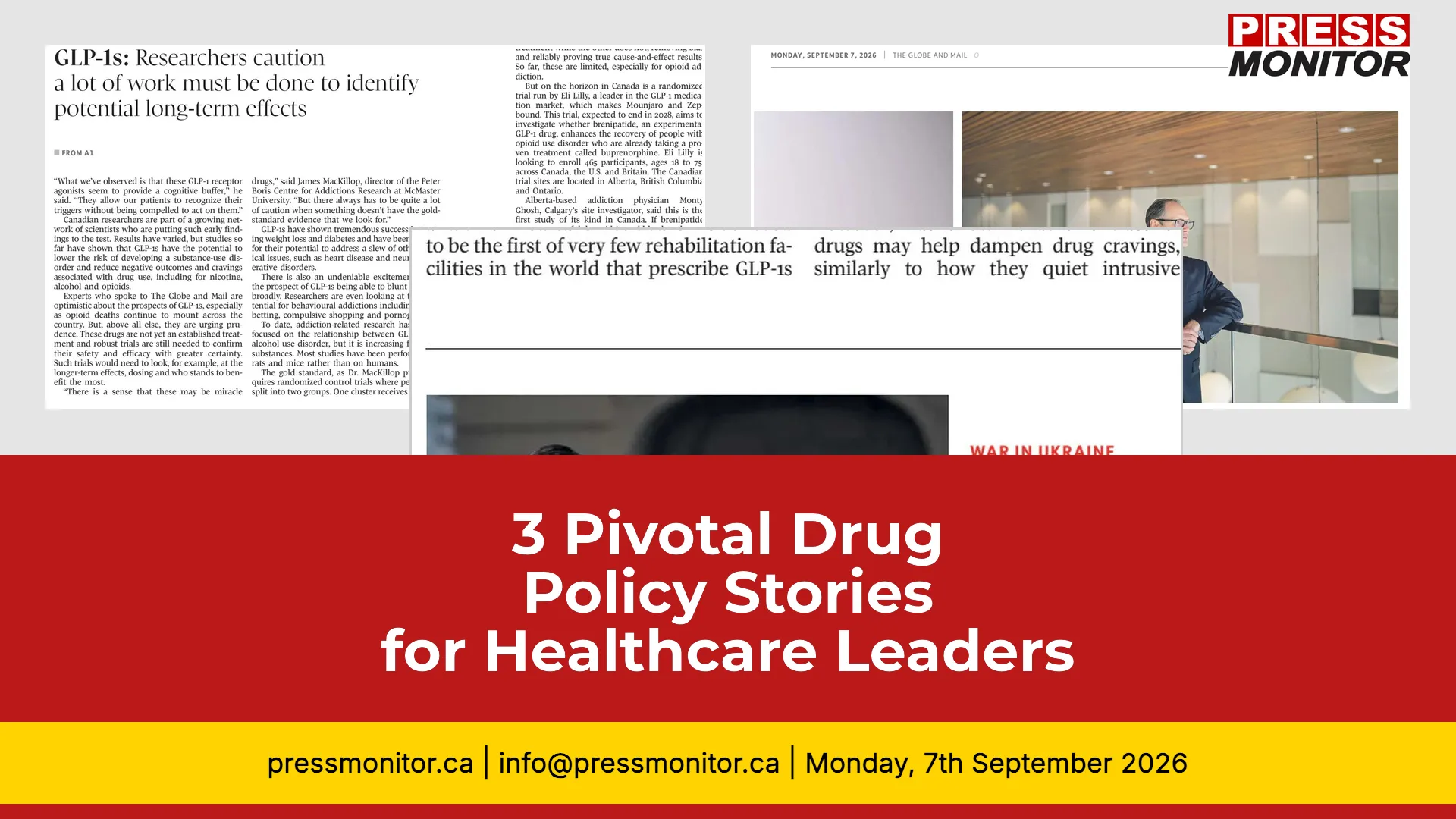
Tracking the latest shifts in narcotics policy requires precise print media monitoring. Today’s press review highlights three pivotal developments reshaping addiction treatment across Canada. According to Press Monitor's tracking of Canadian publications, these stories offer critical insights for healthcare executives and policymakers navigating drug regulation and public health strategy.
1. GLP-1 Medications Target Opioid Cravings
The Globe And Mail reports that GLP-1 medications, known for revolutionizing weight loss, are showing promise in treating opioid addiction. Dr. Adam Scioli at Caron Treatment Centers has been prescribing GLP-1 drugs off-label to over 500 residential clients since 2024. Early research suggests these drugs may dampen drug cravings by altering dopamine pathways in the brain, though experts caution that robust clinical trials are still needed.
Why it matters: Expands treatment options beyond traditional methadone and buprenorphine protocols, potentially addressing a critical gap in residential care.
Key detail: Dr. Adam Scioli at Caron Treatment Centers has prescribed GLP-1 drugs off-label to over 500 clients since 2024. Early clinical observations suggest these medications may dampen drug cravings by altering dopamine pathways in the brain.
Source: The Globe and Mail
Next step: Monitor upcoming peer-reviewed trial results before integrating into standard formulary guidelines.
2. Large-Scale Study Links GLP-1s to Fewer Overdose Deaths
The Globe And Mail reports that research suggests GLP-1 medications could reduce addiction risks and substance-related deaths. A study of over six hundred thousand US veterans found fifty percent fewer substance-related deaths among those taking GLP-1s. Canadian experts urge more research before widespread off-label use.
Why it matters: Provides macro-level epidemiological evidence supporting pharmaceutical intervention in substance abuse management.
Key detail: Analysis of over 600,000 US veterans reveals a fifty percent reduction in substance-related deaths among patients taking GLP-1 medications. Canadian researchers are urging robust local trials before widespread off-label adoption.
Source: The Globe and Mail
Next step: Assess regulatory pathways for expanded indications and reimbursement models.
3. Regional Health Authorities Prioritize Rehab Drug Integration
The Globe And Mail (ottawa/quebec Edition) reports that rehabilitation drugs may dampen drug cravings, with evidence supporting the claim. Officials in Cape Breton Island and a meeting in Kyiv are addressing related policies. Lululemon’s new CEO Valentyn Ogrinko has taken the helm amid a challenging moment.
Why it matters: Signals a strategic shift toward pharmacological harm reduction in rural and remote communities facing severe supply chain disruptions.
Key detail: Officials in Cape Breton Island are aligning provincial strategies with emerging data on craving-dampening medications, while national bodies review broader prescription drug pricing and distribution frameworks.
Source: The Globe and Mail
Next step: Engage with regional health boards to align funding models with new clinical evidence.
These developments underscore how advanced media intelligence continues to surface actionable intelligence ahead of mainstream digital coverage. Tracking this news on narcotics policy via print media monitoring ensures your organization stays ahead of regulatory shifts. Which therapeutic approach do you believe will see the fastest approval in Canada?