3 Pivotal Fertilizer & Agricultural Input Stories for Industry Leaders


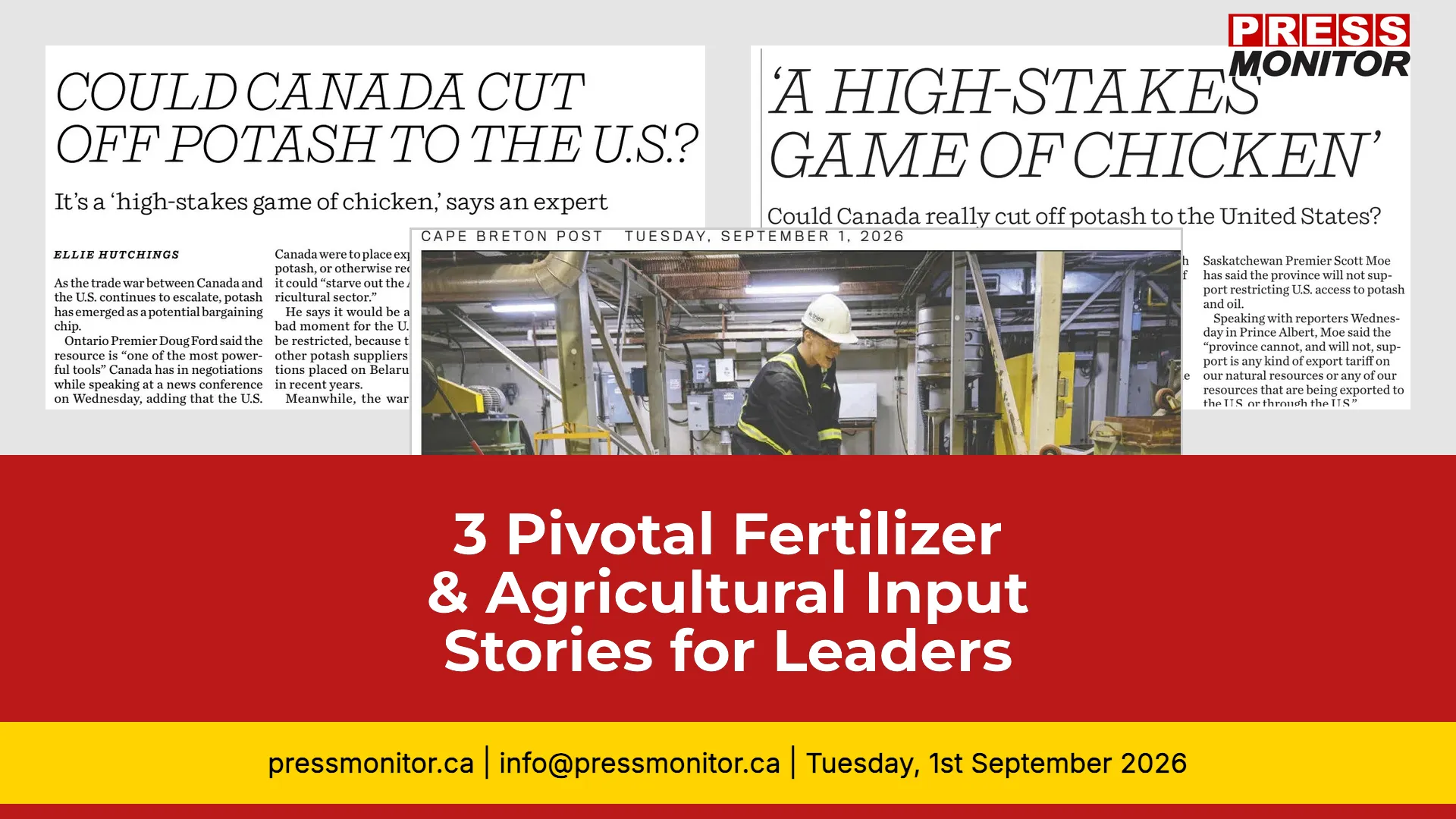
As the Canada-U.S. trade war escalates, potash has emerged as a critical bargaining chip. In this press review, we analyze three key stories from Canadian print media that every fertilizer industry leader needs to know. According to Press Monitor's tracking of Canadian publications, these developments are reshaping the agricultural inputs landscape.
1. Potash as a Bargaining Chip in Canada-U.S. Trade War
The escalating trade war between Canada and the US has turned potash into a potential bargaining chip. Ontario Premier Doug Ford stated that the resource is one of the most powerful tools Canada has in negotiations, adding that the US agricultural sector would be dead overnight if Canada were to cut it off. Akaash Maharaj, a senior fellow at the Munk School of Global Affairs & Public Policy, confirmed that potash has become indispensable to the American agriculture sector, which is currently dependent on Canadian exports.
Why it matters: Potash exports to the U.S. are worth billions, and any disruption could devastate American agriculture.
Key detail: Ontario Premier Doug Ford stated that cutting off potash could "kill the U.S. agricultural sector dead overnight." Akaash Maharaj confirmed American dependence on Canadian potash.
Source: Cape Breton Post, The Chronicle Herald, The Daily Press
Next step: Monitor trade negotiations and potential export restrictions.
2. Saskatchewan Premier Rejects Export Restrictions
According to a Saskatoon Starphoenix report, Canadian Premier Doug Ford has proposed using potash exports as a leverage point in trade negotiations with the U.S., warning of catastrophic impacts on American agriculture. While experts confirm potash’s critical role in U.S. farming, analysts note the reciprocal risks to Canada’s economy and potential retaliatory tariffs from President Trump. Saskatchewan Premier Scott Moe rejected export restrictions, emphasizing the resource’s value to both nations.
Why it matters: Provincial divisions over trade strategy highlight the complexity of using potash as leverage.
Key detail: Premier Scott Moe opposed export restrictions, emphasizing the resource's value to both nations. Analysts warn of reciprocal risks and retaliatory tariffs.
Source: Saskatoon Starphoenix
Next step: Assess impact on Canadian fertilizer companies and U.S. supply chains.
3. Potash Operations at Nutrien Plant
The Cape Breton Post reports that Alan Grell spreads potash to dry at the Nutrien Pilot Plant in Saskatoon, Saskatchewan in May. Michelle Berg is supporting potash operations across Sask.
Why it matters: Behind-the-scenes look at potash production in Saskatchewan, the heart of Canada's fertilizer industry.
Key detail: Alan Grell spreads potash to dry at Nutrien Pilot Plant in Saskatoon. Michelle Berg supports potash operations across the province.
Source: Cape Breton Post
Next step: Understand production capacity and logistics.
Stay informed with daily media monitoring from Press Monitor, delivering the latest media intelligence on fertilizers and agricultural inputs. Which of these stories will have the biggest impact on your business? Let us know in the comments.
