3 Pivotal Oil & Gas Stories for Energy Leaders


Oil & Gas executives need sharp media intelligence to navigate today’s market shifts. This press review distills Canada’s top business reporting into actionable insights for leaders managing policy, trade, and fiscal exposure. For teams tracking news on oil and gas, consistent media monitoring is non-negotiable. According to Press Monitor's tracking of Canadian publications, here are three pivotal stories shaping the sector right now.
1. Alberta Seeks $1.3B Compensation on Pipeline Deal
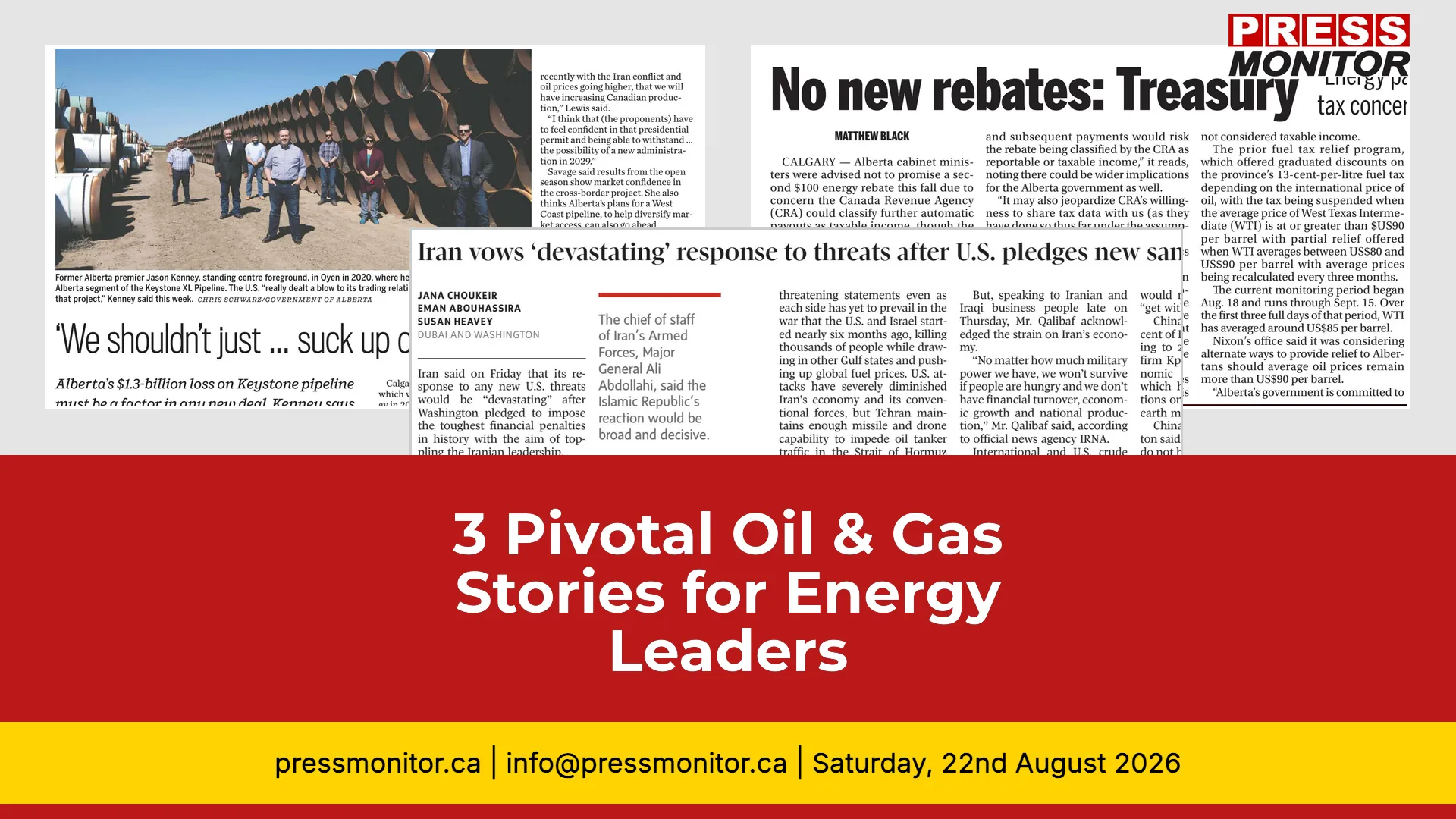
Edmonton Journal reports that Alberta is seeking compensation for its $1.3 billion investment in the Keystone XL pipeline, which was cancelled by the U.S. government. Former premier Jason Kenney says Alberta's loss must be factored into any new trade agreements.
Why it matters: Cross-border infrastructure disputes directly impact regional revenue forecasts and future trade leverage.
Key detail/stat: Alberta officials are formally pursuing compensation for its cancelled C$1.3 billion investment in the Keystone XL pipeline, with former premier Jason Kenney urging that this financial hit be factored into upcoming U.S.-Canada trade negotiations.
Source: Edmonton Journal
Next step: Monitor federal-provincial coordination on trade concessions and infrastructure financing models.
2. Energy Payouts Could Draw CRA Tax Concerns
Calgary Sun reports that Treasury Board advised Alberta cabinet ministers against promising a second $100 energy rebate this fall, warning that subsequent automatic payouts might be classified by the Canada Revenue Agency as taxable income.
Why it matters: Direct consumer rebates face scrutiny under federal tax codes, potentially altering provincial spending strategies.
Key detail/stat: Treasury Board advised cabinet against promising a second $100 energy rebate this fall, warning that automatic payouts might be reclassified by the Canada Revenue Agency as taxable income.
Source: Calgary Sun
Next step: Review provincial budget allocations and anticipate potential adjustments to household support programs.
3. Iran Vows Devastating Response to Threats
Iran said on Friday that its response to any new U.S. threats would be devastating after Washington pledged to impose the toughest financial penalties in history with the aim of toppling the Iranian leadership.
Why it matters: Escalating geopolitical tensions in the Middle East introduce volatility into global crude supply chains and pricing benchmarks.
Key detail/stat: Tehran pledged a devastating countermeasure following Washington’s announcement of historic financial penalties aimed at regime change, raising immediate concerns for downstream refining margins and LNG export routes.
Source: The Globe and Mail
Next step: Stress-test supply chain contingencies and hedge against commodity price spikes driven by international conflict.
These developments underscore why proactive print media monitoring remains essential for risk management in volatile markets. How will your organization adjust its capital allocation strategy in response to shifting trade dynamics and regulatory scrutiny? Share your perspective below.