7 Pivotal Seniors & Aging Stories for Canadian Healthcare Leaders


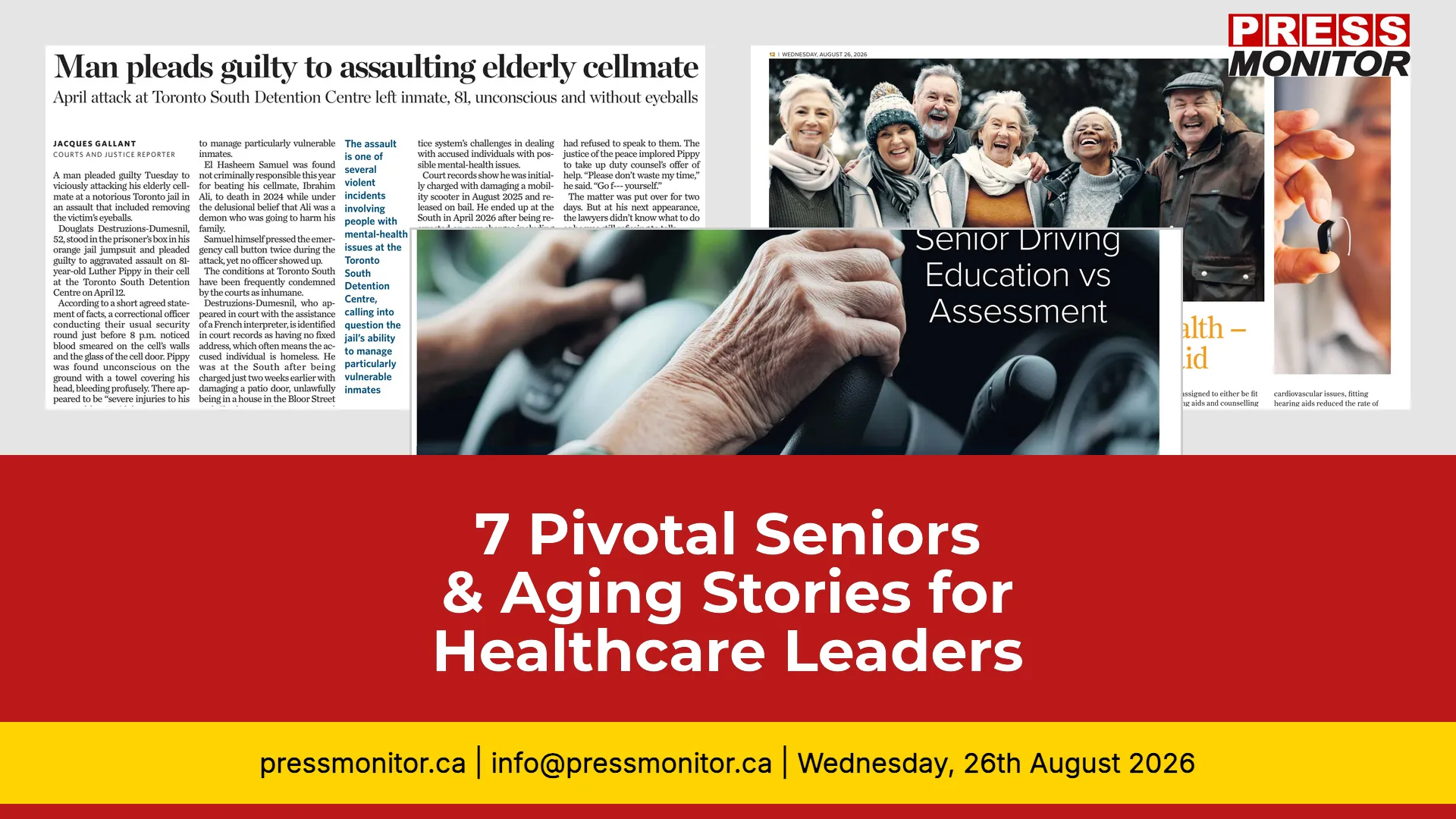
Welcome to your essential press review on seniors, aging, and elderly issues in Canada, powered by Press Monitor's comprehensive print media monitoring across the nation. From Victoria to St. John's, we track the stories that matter most to those caring for and serving our aging population. Today's selection of 7 stories covers critical developments in elder safety, cognitive health, retirement planning, and senior living—insights you need to stay ahead.
1. 81-Year-Old’s Eyes Removed in Toronto Jail Attack
Selon Jacques Gallant, reporter de The Toronto Star, un homme a plaidé coupable d’une attaque brutale contre son camarade de cellule âgé dans un centre de détention de Toronto, entraînant l’enlèvement des yeux de la victime. Douglats Destruzions-Dumesnil, 52, a reconnu avoir attaqué Luther Pippy, 8l, dans leur cellule au Toronto South Detention Centre le 12 avril. L’incident, survenu dans le contexte d’une série de violences impliquant des personnes souffrant de troubles mentaux, soulève des questions sur la capacité du centre à gérer les détenus vulnérables. L’attaque est l’une des plusieurs violences impliquant des personnes souffrant de problèmes de santé mentale au centre de détention de Toronto South, soulevant des questions sur la capacité du centre à gérer les détenus vulnérables.
Why it matters: This horrifying incident raises urgent questions about the safety of elderly and mentally ill inmates in correctional facilities.
Key detail: Douglats Destruzions-Dumesnil, 52, pleaded guilty to attacking Luther Pippy, 81, in their cell at Toronto South Detention Centre on April 12, resulting in Pippy's eyes being removed.
Source: Toronto Star, by Jacques Gallant.
Next step: Advocate for improved mental health protocols and protective housing for vulnerable elderly inmates.
2. Hearing Aids May Slow Cognitive Decline in High-Risk Individuals
The Times Colonist reports that a study published in 2023 sought to determine if treating hearing loss in older adults reduces cognitive decline. The study found that hearing aids and counseling did not significantly slow cognitive decline across the board, but for individuals with higher cardiovascular risk factors, the intervention slowed cognitive decline by 48% over three years.
Why it matters: Age-related hearing loss is a modifiable risk factor for dementia; targeted intervention could delay cognitive decline.
Key detail: A 2023 study found that hearing aids and counseling slowed cognitive decline by 48% over three years in older adults with higher cardiovascular risk.
Source: Times Colonist.
Next step: Integrate hearing assessments into routine geriatric care, especially for patients with cardiovascular comorbidities.
3. Seniors Urged to Manage Driving Safety
Times Colonist reports that senior drivers should be proactive about their driving assessments to reduce stress and safety risks. While crash frequency is not higher for seniors, they face a greater risk of injury due to age-related frailty.
Why it matters: Aging drivers face increased injury risk due to frailty; proactive assessment can prevent accidents and extend safe driving years.
Key detail: While crash frequency is not higher for seniors, they are more vulnerable to injury; self-assessment and refresher courses are recommended.
Source: Times Colonist.
Next step: Encourage senior patients to undergo voluntary driving assessments and explore alternative transportation options.
4. 82-Year-Old Warned of Heatstroke and Cognitive Risks
{source_name} reports that an elderly man with osteoporosis, a pacemaker, and other health conditions suffered confusion and cognitive challenges after prolonged exposure to extreme heat. After ingesting an electrolyte-rich drink, his symptoms improved within about 15 minutes. Experts warn this could indicate symptoms of heatstroke or transient electrolyte imbalances, particularly when fluid-only hydration is involved.
Why it matters: Extreme heat poses particular danger to seniors with multiple health conditions, potentially mimicking stroke symptoms.
Key detail: An elderly man with osteoporosis and a pacemaker developed confusion after prolonged heat exposure; an electrolyte drink resolved symptoms in 15 minutes.
Source: Dr. Keith Roach, Times Colonist.
Next step: Educate seniors and caregivers on heatstroke signs and the importance of electrolyte balance over plain water.
5. Finding Home at Nigel Living
The Times Colonist reports that for Ken, the opportunity to move into Nigel Living changed everything. After years of shared living, having a place to call his own was a welcomed change. The bright suite, high ceilings, and large windows made an instant impression. Located in the heart of Saanich, Nigel Living gives Ken easy access to everything he enjoys.
Why it matters: Purpose-built senior housing fosters independence and community connection.
Key detail: Ken, a resident of Nigel Living in Saanich, found a bright suite with high ceilings and large windows that gave him easy access to local amenities and a renewed sense of home.
Source: Times Colonist.
Next step: Explore similar supportive housing models that prioritize design and location for aging in place.
6. Job Cuts Controversy: Early Retirement Incentive Program Questioned
Ottawa Citizen reports that a former federal executive is questioning the government’s handling of job cuts through the Early Retirement Incentive (ERI) program. Concerns are raised about the sequence of workforce adjustment measures and ERI approvals, suggesting missed opportunities for voluntary departures.
Why it matters: The federal government's handling of workforce reduction impacts older public servants planning retirement.
Key detail: A former executive questions the sequence of job cuts versus the Early Retirement Incentive (ERI) program, suggesting missed opportunities for voluntary departures.
Source: Ottawa Citizen, by Scott Taymun.
Next step: Review ERI policies to ensure fair and transparent processes for older employees.
7. Valeo Pharma Employee Retirement Plan Terminated – Claims Deadline Set
Selon Le Journal de Montreal, le régime de retraite Pension Plan for Certain Employees of Valeo Pharma Inc. Formerly Employed by Baralex Inc. a été mis fin à la date du 3 décembre 2024. Les employés sans relevé de droits qui pensent avoir des droits sont invités à faire valoir leurs droits avant le 26 septembre 2026 auprès de l'administrateur provisoire. Retraite Québec propose aux retraités de faire administrer leurs rentes. Pour plus d'informations, consultez votre relevé de droits.
Why it matters: Retirement security is paramount; this termination affects employees' financial futures.
Key detail: The Pension Plan for Certain Employees of Valeo Pharma Inc. was terminated on December 3, 2024; affected employees have until September 26, 2026 to file claims with Retraite Québec.
Source: Le Journal de Montréal.
Next step: Notify affected employees and facilitate claim submission through Retraite Québec.
This press review was compiled through rigorous print media monitoring across Canadian publications by Press Monitor. What critical issue in elder care needs deeper coverage? Share your thoughts in the comments.