7 Defining Insurance and Climate Stories for Risk Leaders


From catastrophic flooding in St. Catharines to a surge in climate-related claims across Canada, the intersection of extreme weather and insurance is reshaping the risk landscape. According to Press Monitor's tracking of Canadian publications, here are the defining stories for insurance, life and non-life professionals.
1. 60% of Canadians Hit by Climate Disasters
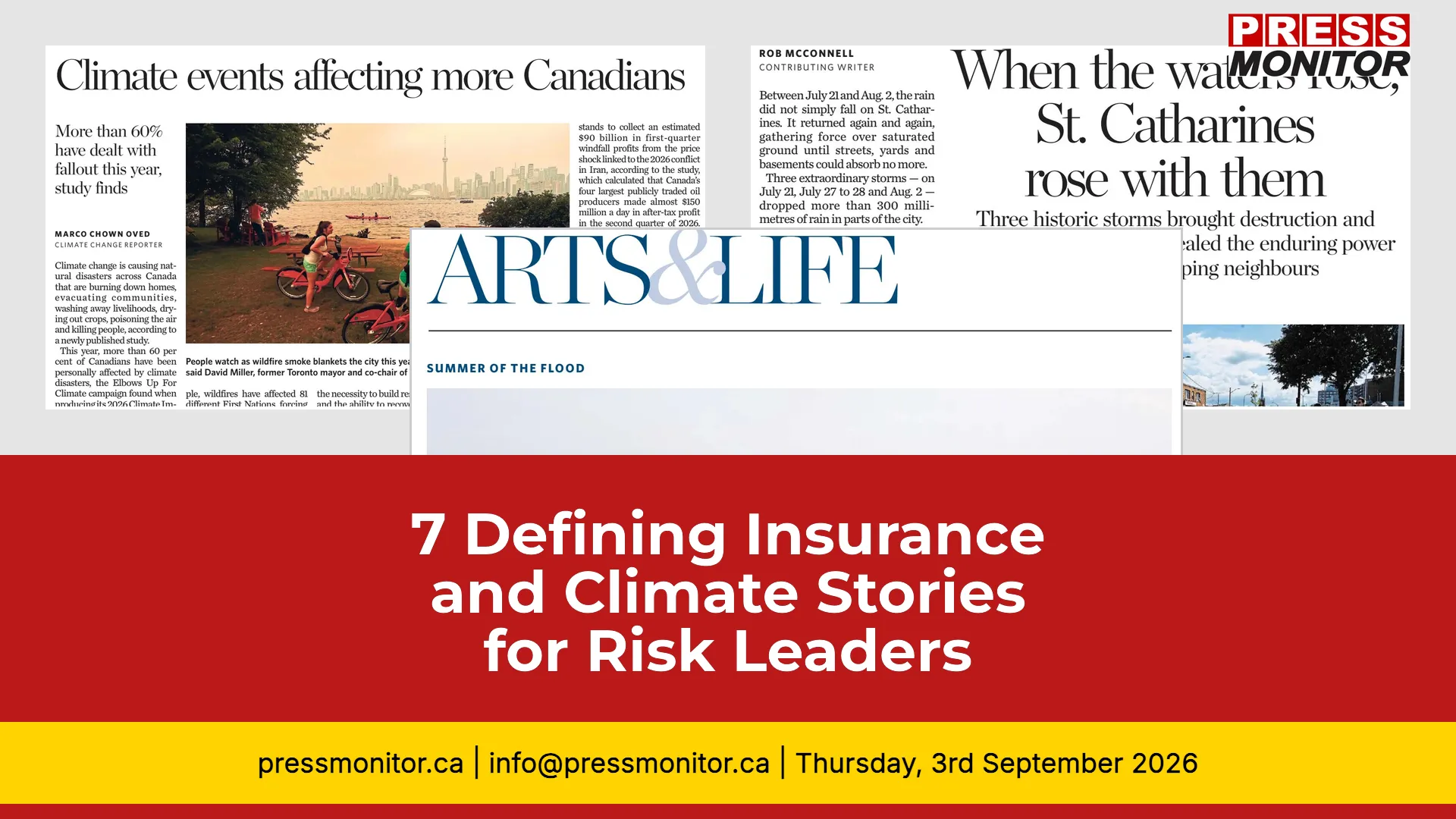
Toronto Star reports that more than 60 per cent of Canadians have been personally affected by climate disasters this year, according to a study by the Elbows Up For Climate campaign, with 934 communities representing over 26 million people hit — triple the number from 2025. Extreme heat, unsafe air quality, flooding, wildfires and drought have struck every province and territory, forcing 9,131 people from 81 First Nations since April, said David Miller, former Toronto mayor and campaign co-chair. The nearly 300 local leaders behind the campaign are calling for a clean electricity grid, energy-efficient affordable housing and an excess-profits tax on oil and gas companies, which stand to collect an estimated C$90 billion in windfall profits.
Why it matters: The scale of impact is unprecedented, with 934 communities and over 26 million people affected — triple the number from 2025. This drives massive demand on property and casualty claims and life insurance underwriting.
Key detail: 9,131 people from 81 First Nations displaced since April. An estimated C$90 billion in windfall profits for oil and gas companies is fueling calls for an excess-profits tax.
Source: Toronto Star, Marco Chown Oved
Next step: Insurers must reassess catastrophe risk pooling and reinsurance treaties for the upcoming renewal cycle.
2. 300mm Rain Floods St. Catharines
The Standard reports that three extraordinary storms between July 21 and August 2 dropped more than 300 millimetres of rain on parts of St. Catharines, with each approaching or exceeding 100-year storm levels and damaging thousands of homes and businesses. Mayor Mat Siscoe declared a state of emergency on August 3 after the city activated its emergency operations centre on July 28. The floods strained roads, sewers and shoreline across the city, even as neighbours, firefighters and city staff rallied to help affected residents.
Why it matters: Three storms delivered over 300mm of rain, each approaching or exceeding 100-year storm levels, causing thousands of home and business claims.
Key detail: Mayor Mat Siscoe declared a state of emergency on August 3 after the city activated its emergency operations centre on July 28.
Source: The Standard (St. Catharines), Rob McConnell
Next step: Municipal insurers and reinsurers should review flood zone mapping and loss adjustment protocols for Ontario's Golden Horseshoe.
3. Summer of the Flood
The Welland Tribune reports that between July 21 and Aug. 2, extraordinary storms in St. Catharines delivered more than 300 millimetres of rain in parts of the city, exceeding what is commonly associated with a 100-year storm. The floods damaged homes and businesses across the city, eroded public and private shoreline, strained roads and sewer and stormwater systems, and left sinkholes, washouts and damaged trails behind.
Why it matters: This is a duplicate of the St. Catharines event, providing corroborating detail on shoreline erosion and infrastructure strain from the same storms.
Key detail: Sinkholes, washouts and damaged trails compound the long-tail liability for municipal insurance pools.
Source: The Welland Tribune
Next step: Community resilience planning must integrate insurance broker input for affordable retrofitting.
4. Severe Storm Batters GTA
The Toronto Star reports that a line of intense storms Wednesday caused rushhour chaos, bringing down trees — and in one case, a traffic light — and flooding roads across the city.
Why it matters: A line of intense storms caused rush-hour chaos, downing trees and a traffic light, and flooding roads across Toronto.
Key detail: The event underscores the volatility of auto and property claims in Canada's largest market.
Source: Toronto Star
Next step: Auto insurers should prepare for a spike in collision and comprehensive claims in the GTA.
5. Segregated Funds: SEG - Unitized Funds
The Montreal Gazette reports that segregated funds, SEG - unitized funds managed by life insurance companies on behalf of policyholders, have seen fluctuations in their values. Great-West Life As REs 354.01 +0.11, REs 371.26 -0.12, and other funds like London Life Funds and Manulife Financial also experienced changes.
Why it matters: Fluctuations in segregated fund values managed by life insurance companies directly impact life and annuity policyholders and broker advice.
Key detail: Great-West Life REs 354.01 rose 0.11, while REs 371.26 fell 0.12, with London Life Funds and Manulife Financial also seeing changes.
Source: Montreal Gazette
Next step: Life insurance brokers must communicate market-linked volatility to clients during annual reviews.
The print media monitoring of these events shows a clear trend: climate risk is now a daily insurance operational reality. What is your organization doing to prepare for the next 100-year storm? Tracked by Press Monitor.