cbc-radio-one-montreal's Power Monitor: Global Tensions, Economic Shifts and Human Stories Dominate April 30 Roundup


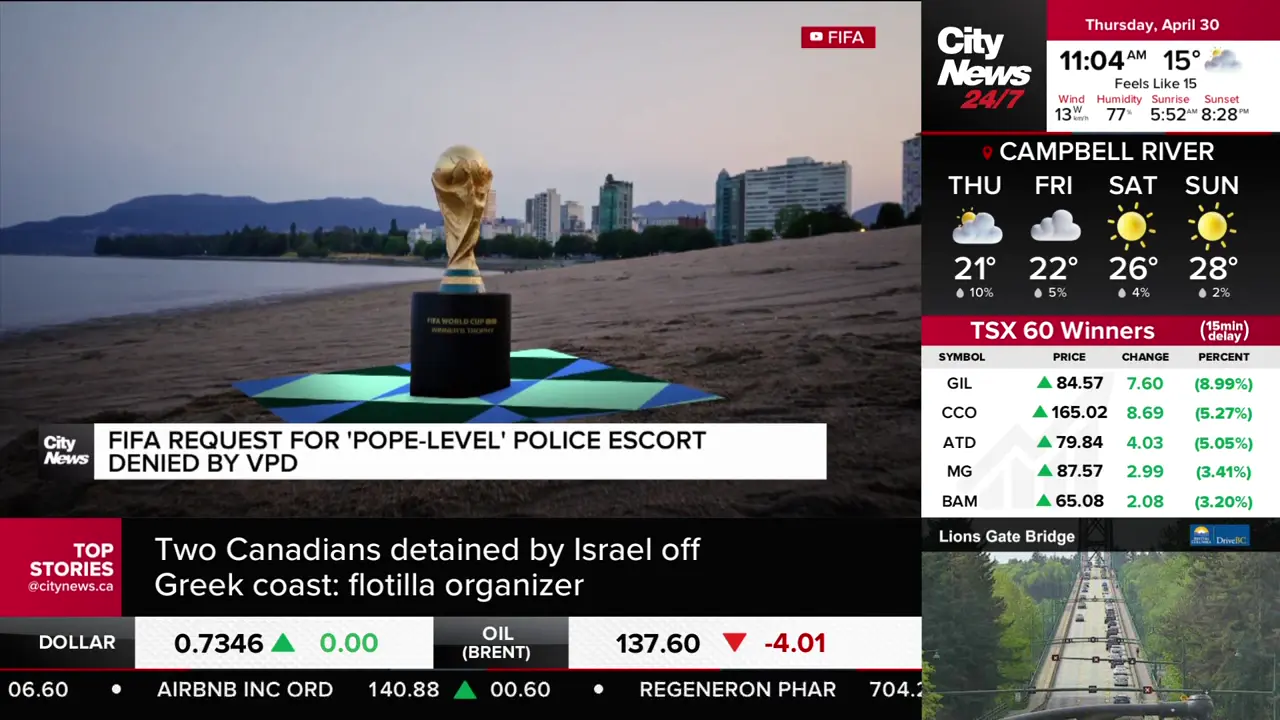
Global tensions escalate as Iran-U.S. conflict tightens its grip on energy markets and humanitarian corridors, while Canada recalibrates its diplomatic and economic alliances in Europe. Domestic fault lines emerge in Alberta’s voter data breach and Quebec’s industrial collapse, exposing vulnerabilities in data security and manufacturing resilience. Human stories—from miraculous animal rescues to the plight of journalists in war zones—remind us of the personal cost behind the headlines. This roundup distills the most consequential developments from today’s cbc-radio-one-montreal coverage, highlighting the forces reshaping politics, business, sports, and society.
Top Political News, Issues and People
Canada’s Ambassador to the EU: A Strategic Reckoning in Brussels
Liberal MP Jonathan Wilkinson’s appointment as Canada’s ambassador to the European Union marks a pivotal moment in Canada-EU relations, framed by Prime Minister Justin Trudeau’s push for deeper economic ties and strategic sovereignty. Wilkinson, in a wide-ranging interview, outlined the urgency of diversifying trade partnerships amid rising protectionism and geopolitical fragmentation. His mandate: to navigate the bloc’s shifting priorities, from green energy investments to defense cooperation, while countering the unpredictability of traditional allies. The segment underscores the Liberal Party of Canada’s pivot toward Europe as a hedge against U.S. trade volatility and a counterweight to China’s dominance in global supply chains.
Key tensions:
-
Trade unpredictability: Wilkinson highlighted the risks of over-reliance on the U.S., citing recent tariff disputes and the need for "predictable partners" in Europe.
-
Sovereignty vs. integration: The ambassador’s role will test Canada’s ability to balance EU regulatory alignment with domestic industrial policy, particularly in sectors like clean technology and digital trade.
-
Geopolitical chessboard: With Iran and the Strait of Hormuz dominating energy security discussions, Wilkinson’s posting takes on added significance as Canada seeks to position itself as a neutral broker in transatlantic energy diplomacy.
Press Monitor Clips: Jonathan Wilkinson on Canada-EU Relations; Prime Minister’s Views on Canada-EU Relations and Economic Resilience; U.S. Defense Secretary Under Senate Scrutiny
Alberta’s Voter Data Breach: A Crisis of Trust in Democratic Systems
A separatist group in Alberta accessed sensitive voter information from Elections Alberta, exposing a critical vulnerability in Canada’s electoral infrastructure. The Centurion Project, linked to the Republican Party of Alberta, allegedly exploited a database leak to target voters for political canvassing, raising alarms about privacy violations and foreign interference. Tom Keenan, the investigative reporter, framed the breach as part of a broader pattern of data misuse in Canadian politics, with echoes of past controversies involving Alexandre Bissonnette and far-right organizing tactics.
What’s at stake:
-
Privacy erosion: The leak compromised personal data of thousands of Albertans, including their political affiliations and contact details, potentially enabling targeted disinformation campaigns.
-
Separatist momentum: The incident coincides with growing separatist sentiment in Alberta, fueled by frustration over federal policies and economic disparities. The Centurion Project’s involvement suggests a coordinated effort to exploit institutional weaknesses for political gain.
-
Regulatory gaps: The breach highlights the lack of a national data protection framework, leaving provinces to grapple with cybersecurity threats independently. Calls for federal intervention are intensifying, but partisan divisions can stall progress.
Press Monitor Clips: Alberta Database Leak Investigation
Iran-U.S. Conflict: The Strait of Hormuz Blockade and Its Global Ripples
The Strait of Hormuz, a chokepoint for 20% of the world’s oil, has become the epicenter of a geopolitical standoff between Iran and the U.S., with Canada caught in the crossfire. Antonio Guterres, UN Secretary-General, warned of a "humanitarian catastrophe" as the blockade disrupts food and fuel shipments to Somalia and South Sudan. Meanwhile, Pete Hegseth, U.S. Defense Secretary, faced a Senate grilling over the Pentagon’s $1.45 trillion budget request, which critics argue prioritizes military expansion over diplomatic solutions.
Escalating stakes:
-
Energy shock: Oil prices surged as tanker traffic through the strait dwindled, threatening to destabilize global markets already strained by the Iran war and sanctions.
-
Humanitarian fallout: The World Food Program and Save the Children reported delays in aid deliveries, exacerbating famine risks in East Africa. Katie Simpson and Sasha Petrosik analyzed the cascading effects on global food security.
-
Canada’s dilemma: With Mark Carney, former Bank of Canada governor, cautioning against entanglement in the conflict, Ottawa must balance its alliance with the U.S. against the economic and moral costs of escalation.
Press Monitor Clips: Iran War Impact: Strait of Hormuz Blockade and Global Consequences; US Defense Secretary Pete Hegseth on Military Budget and War Strategy
Top Business News, Issues and People
Quebec’s Furniture Industry Collapse: A Microcosm of Globalization’s Dark Side
The economic collapse of Bestar and South Shore Furniture, two pillars of Quebec’s manufacturing sector, exposes the brutal realities of foreign competition and tariff wars. Martin Tardif, reporting from Montreal, traced the decline to a perfect storm: China and Vietnam’s dumping of low-cost goods, the pandemic’s supply chain disruptions, and Canada’s lagging investment in automation. Unifor, the union representing workers, framed the collapse as a failure of industrial policy, while Nadege Koutou highlighted the human toll—layoffs, shuttered factories, and the erosion of Quebec’s once-dominant furniture trade.
Root causes and remedies:
-
Dumping allegations: The Manufactured Wood Products Association accused foreign manufacturers of flooding the market with subsidized products, undercutting Canadian producers by up to 30%. The federal government is under pressure to impose anti-dumping tariffs, but the process is mired in bureaucracy.
-
Automation gap: Quebec’s furniture makers lag in adopting robotics and AI, leaving them vulnerable to low-wage competitors. Prachika Joshi’s exclusive report on the federal government’s inquiry into the sector revealed a lack of coordinated support for small and medium-sized enterprises (SMEs).
-
Union perspective: Daniel Cloutier, a Unifor representative, argued that the crisis demands a Marshall Plan for Canadian manufacturing, including retraining programs, subsidies for innovation, and strategic trade protections.
Press Monitor Clips: Quebec furniture industry collapse and economic impact; Federal government inquiry into manufactured wood products
Manufactured Wood Products Inquiry: Can Canada Protect Its Industry?
The federal government’s inquiry into the manufactured wood products sector is a rare acknowledgment of the existential threats facing Canadian manufacturers. Prachika Joshi, in a field report from Quebec, detailed the inquiry’s findings: foreign competitors are exploiting loopholes in trade agreements, while Canadian firms struggle with high energy costs and labor shortages. The report also highlighted the role of China and Vietnam, whose state-subsidized industries undercut domestic producers by up to 40%.
Policy options on the table:
-
Tariff escalation: Industry advocates are pushing for countervailing duties on subsidized imports, but the process is slow and politically contentious.
-
Subsidy schemes: The inquiry recommended expanding Canada’s Strategic Innovation Fund to support automation and R&D in the sector.
-
Supply chain resilience: The report called for diversifying sourcing away from China, with a focus on Southeast Asia and Latin America as alternative manufacturing hubs.
Press Monitor Clips: Federal government inquiry into manufactured wood products
Canada’s Economic Resilience: Navigating Trade Uncertainty
With Prime Minister of Canada preparing for a European tour to shore up alliances, the government is doubling down on economic resilience as a cornerstone of its foreign policy. A Liberal MP interviewed on the program emphasized the need to reduce reliance on the U.S., citing recent tariff disputes and the Trump administration’s erratic trade policies. The discussion touched on tariffs, supply chain diversification, and the role of Cabinet Ministers in negotiating new trade deals. However, critics argue that Canada’s approach lacks urgency, with Harriet Soloway noting the absence of a clear strategy to address the missing line item in the Spring Economic Update for targeted industrial support.
Key themes:
-
Predictable partners: The MP highlighted Europe’s potential as a stable alternative to the U.S., but warned that Canada must offer more than just rhetoric to secure deals.
-
Constituent pressure: The government faces growing demands from industries like automotive and agriculture to negotiate better terms, particularly in light of the Iran war’s impact on global trade routes.
-
Public skepticism: Polls show Canadians are increasingly concerned about economic stability, with 62% supporting government intervention to protect local industries.
Press Monitor Clips: Prime Minister’s Views on Canada-EU Relations and Economic Resilience; Spring Economic Update Overview
Top Sports News, Issues and People
FIFA World Cup 2026: Fan Travel Costs and the Human Side of Mega-Events
The FIFA World Cup 2026, set to be the largest in history with matches across 16 locations in North America, is already sparking debates about fan experiences and accessibility. A promotional segment from MetLife Stadium in New York City highlighted the logistical challenges, from transportation costs to accommodation shortages. Fans traveling from Toronto or Vancouver face steep price hikes, with some estimating total expenses exceeding $10,000 for the tournament. The segment also touched on the environmental impact of the event, a growing concern for organizers.
Fan-centric challenges:
-
Cost barriers: The average fan’s budget is under pressure from inflation and airline price surges, raising questions about whether the World Cup risks becoming an elite spectacle rather than a global celebration.
-
Transportation bottlenecks: Penn Station in New York City is expected to handle record crowds, but infrastructure upgrades have lagged behind demand.
-
Cultural exchange: Despite the logistical hurdles, the segment underscored the tournament’s potential to unite diverse communities, with fans from East Rutherford, New Jersey, and beyond sharing stories of anticipation and excitement.
Press Monitor Clips: FIFA World Cup 2026 Promotional Segment
Toronto Blue Jays: Fan Loyalty and the Davis Schneider Factor
The Toronto Blue Jays continue to captivate fans with a mix of on-field drama and off-field personalities, including Davis Schneider, whose career highlights and fan interactions have made him a standout. A segment transitioning to an interview with Schneider provided a glimpse into his journey, from minor leagues to the majors, and his appreciation for the Blue Jays’ loyal fanbase. The discussion also touched on the team’s prospects for the upcoming season, with Schneider emphasizing the importance of team chemistry and community support in navigating the challenges of a grueling schedule.
What’s driving the buzz:
-
Fan engagement: Schneider’s accessibility and relatability have endeared him to fans, particularly in a post-pandemic era where connection is key.
-
Team dynamics: The Blue Jays’ management is betting on a blend of veteran leadership and young talent to contend in a competitive American League East division.
-
Economic impact: The team’s success translates to boosts in local tourism and merchandise sales, benefiting businesses across Toronto and beyond.
Press Monitor Clips: Sports segment transitioning to interview
Other Top News, Issues and People
Human Interest Extraordinaire: The Miraculous Rescue of Boo-Boos the Chicken
In a story that captured the internet’s imagination, Jackie Calhoun, a retired nurse from Arkadelphia, Arkansas, performed mouth-to-mouth resuscitation on a drowning chicken named Boo-Boos, reviving it after minutes without breath. The segment, blending humor and heart, drew parallels to biblical resurrection narratives and explored the unexpected challenges of poultry care. Becky Calhoun and Marian Morris, family members involved in the rescue, shared anecdotes about the chicken’s quirky personality and the community’s reaction to the miracle. The story served as a lighthearted reminder of the resilience of life, even in its most unconventional forms.
Why it resonated:
-
Viral appeal: The tale of Boo-Boos’ revival spread rapidly on social media, with users dubbing it the "chicken Lazarus" and sharing their own animal rescue stories.
-
Family bonds: The segment highlighted the Calhouns’ close-knit relationship and their shared commitment to animal welfare, despite the absurdity of the situation.
-
Cultural moment: In an era of global crises, the story offered a moment of levity, with Diane Buckner noting its potential to boost morale in difficult times.
Press Monitor Clips: Miraculous Chicken Revival Story; The Miraculous Rescue of Boo-Boos: A Chicken's Life Saved
Journalists Under Fire: The Global Media Freedom Crisis
The escalating risks faced by journalists in conflict zones like Ukraine, Gaza, and Lebanon dominated a panel discussion on press freedom. Christina Lam, a veteran reporter, and Amal Khalil, a Lebanese journalist, detailed the targeted attacks and war crimes targeting media personnel, including the killing of a Ukrainian journalist in Arkadelphia, Arkansas—a grim irony given the town’s recent brush with poultry miracles. Reporters Without Borders warned of a global media freedom crisis, with 67% of countries experiencing a decline in press freedom in 2026.
The human cost:
-
Targeted violence: Journalists are increasingly viewed as combatants, with blue flak jackets becoming symbols of vulnerability rather than protection.
-
Impunity: Perpetrators of attacks on journalists operate with near-total impunity, particularly in autocratic regimes and war-torn regions. The Hague’s International Criminal Court has yet to secure a single conviction for such crimes.
-
Public awareness: The segment called for greater support for independent investigations and the establishment of an international body to monitor and address attacks on the press.
Press Monitor Clips: Journalist Safety Under Threat: Global Media Freedom Crisis; Christina Lamb on Press Safety in Conflict Zones
Iran Nuclear Program and Canada-Iran Relations: A Delicate Balancing Act
Mehdi Taj’s segment on Iran’s nuclear program and Canada-Iran relations provided a sobering update on the Strait of Hormuz standoff and its implications for global security. The discussion covered Aung San Suu Kyi’s recent statements on human rights in Iran, as well as the UN’s role in mediating the crisis. Canada’s stance remains cautious, with officials emphasizing diplomacy over confrontation, but the segment underscored the challenges of navigating a multipolar world where alliances are fluid and trust is scarce.
Key takeaways:
-
Nuclear brinkmanship: Iran’s enrichment activities continue to raise alarms, with IAEA inspectors reporting increased uranium stockpiles.
-
Canada’s role: Ottawa is caught between its human rights commitments and its economic interests, particularly in energy and trade.
-
Regional spillover: The crisis has fueled tensions in the Persian Gulf, with Saudi Arabia and UAE increasing military preparedness in response to Iranian provocations.
Press Monitor Clips: International Relations and Human Rights Updates
End Note
Today’s roundup reveals a world in flux, where geopolitical tensions, economic fragilities, and human resilience intersect in unexpected ways. From the Strait of Hormuz to Alberta’s voter data breach, the stories curated by cbc-radio-one-montreal underscore the need for vigilance, adaptability, and empathy. As Prime Minister Justin Trudeau prepares for his European tour, Jonathan Wilkinson assumes a critical role in shaping Canada’s future in Europe, while Quebec’s furniture industry grapples with the harsh realities of globalization. Amid the chaos, stories like Boo-Boos the chicken remind us of the power of hope—and the absurdity of life’s unexpected twists.