citynews-vancouver's Power Monitor: Geopolitical Shifts, Ticket Wars and Breaking Crisis Coverage Dominate 26 April 2026


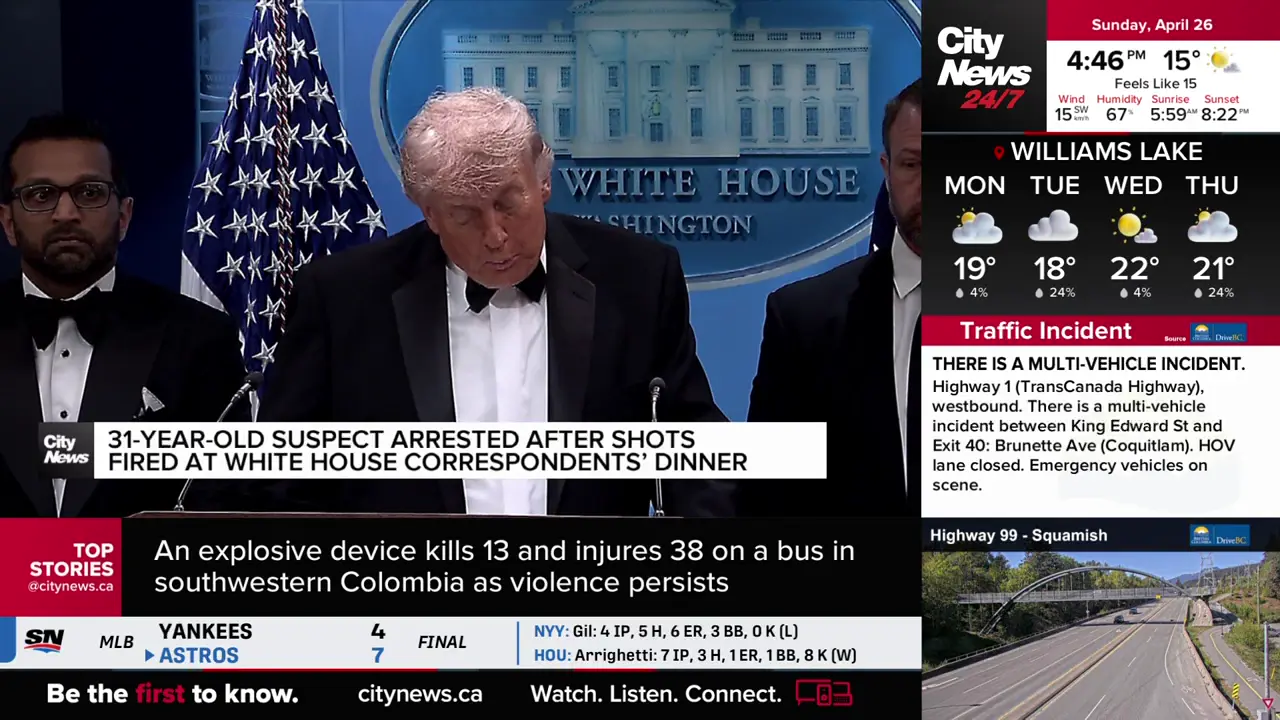
A day of seismic geopolitical tremors, domestic policy flashpoints and sports stadium standoffs has forced citynews-vancouver’s Power Monitor to pivot from routine coverage to crisis mode. From a terror attack at the Washington Correspondents’ Dinner to escalating debates over ticket price caps in British Columbia, today’s roundup reveals how global tensions, local economics and civic identity are colliding in real time. This analysis distills the curated must-watch segments that explain why these stories matter now—and what they signal for the week ahead.
Geopolitical tremors: Iran, Ukraine and Colombia dominate diplomatic faultlines
Iran’s Foreign Minister has warned of ‘serious consequences’ if U.S. diplomacy in Pakistan fails to de-escalate tensions, while Ukraine’s President Volodymyr Zelensky has accused Moscow of deliberately targeting the Zaporizhia nuclear plant—a move that risks a radiological catastrophe. Meanwhile, a FARC splinter group has claimed responsibility for an explosion on the Pan American Highway in western Colombia, underscoring how proxy conflicts and state fragility are redrawing the map of global insecurity. These developments are not isolated; they form a single arc of escalating proxy warfare that threatens to draw in regional powers and disrupt energy and trade corridors.
The White House Correspondents’ Dinner shooting—now confirmed as a terror attack—has exposed vulnerabilities in U.S. event security and raised questions about the Secret Service’s preparedness. With the shooter identified as a 31-year-old Torrance man with a history of mental health issues, the FBI’s investigation is widening, probing whether ideological motives or personal grievances drove the attack. Early ballistics and digital forensics suggest a lone-actor profile, but the incident has already triggered a national conversation about the balance between free speech celebrations and event safety.
Ticket wars: Ontario’s price cap sparks BC policy earthquake
The Ontario government’s decision to cap resale ticket prices at 50% above face value has ignited a fierce debate in British Columbia, where economists like Tom Davidoff warn of unintended consequences. Davidoff, speaking on a City News panel, argued that price controls could shrink supply, drive transactions underground and ultimately hurt fans by reducing transparency. ‘When you cap prices, you don’t cap demand—you just push it into the shadows,’ he said. The BC Ministry of Attorney General is now weighing whether to follow Ontario’s lead, a move that could reshape the $12 billion North American ticketing market overnight.
Ticketmaster and Live Nation, already under antitrust scrutiny, face fresh pressure as BC considers legislation that would outlaw dynamic pricing and mandate disclosure of all resale fees. Industry insiders warn that without a coordinated approach, the result could be a patchwork of regulations that fragment the market and increase costs for consumers. The debate has spilled into the Richmond Night Market, where vendors report a 15% drop in foot traffic following rumours of a ticketing crackdown—highlighting how policy decisions in distant capitals can ripple into local economies.
Sports and civic identity: Whitecaps FC at a crossroads
Vancouver’s Whitecaps FC are at the heart of a civic identity crisis as relocation rumors swirl and fan campaigns like ‘Save the Caps’ gain momentum. Bruno Casado’s 411-second field report captured the tension inside BC Place, where supporters waved ‘Keep the Caps in Vancouver’ banners while prospective owners hinted at a potential move to Colorado. The team’s stadium situation—long a sore point—has become a proxy for broader debates about public investment in sports infrastructure and the role of MLS franchises in urban branding.
Meanwhile, the Horizon League in Georgia is redefining inclusion in sports by offering a rubberized baseball field for athletes with disabilities. Eliana Guzman’s segment on this special needs league underscored how community-driven initiatives can fill gaps left by mainstream sports bodies. The league’s success—measured in smiles, personal bests and community donations—offers a counter-narrative to the commercialisation of sport and a model for cities like Vancouver seeking to expand access.
Crime and justice: From Richmond to Chilliwack, public safety in the spotlight
A fatal confrontation in Richmond has led to the arrest of Kaiji Adam Lowe on multiple murder charges, prompting RCMP to launch a province-wide manhunt. The incident, which unfolded in a suburban area, has drawn comparisons to the Robert Pickton case and raised concerns about mental health interventions and police response times. In Chilliwack, fire crews battled a blaze that destroyed a heritage home, while in Vancouver, Whitecaps fans staged a peaceful protest outside City Hall demanding answers on stadium funding.
The White House shooting has also triggered a re-examination of public safety protocols in Vancouver. City officials are reviewing evacuation plans for major events, including the Celebration of Light fireworks festival, after learning that the Washington shooter evaded multiple security checkpoints. The incident has forced a reckoning with the city’s own preparedness for large-scale terror attacks or active shooter scenarios.
Press Monitor Clips: Iran-U.S. diplomacy update; Ontario ticket price cap debate; Whitecaps FC stadium relocation analysis
Press Monitor Clips: White House shooting investigation exclusive; Richmond Night Market economic impact; Horizon League inclusion feature