Global Crisis Unfolds: Iran’s Leadership Vacuum, U.S.-Israel Strikes, and Canada’s Balancing Act in the Middle East Storm


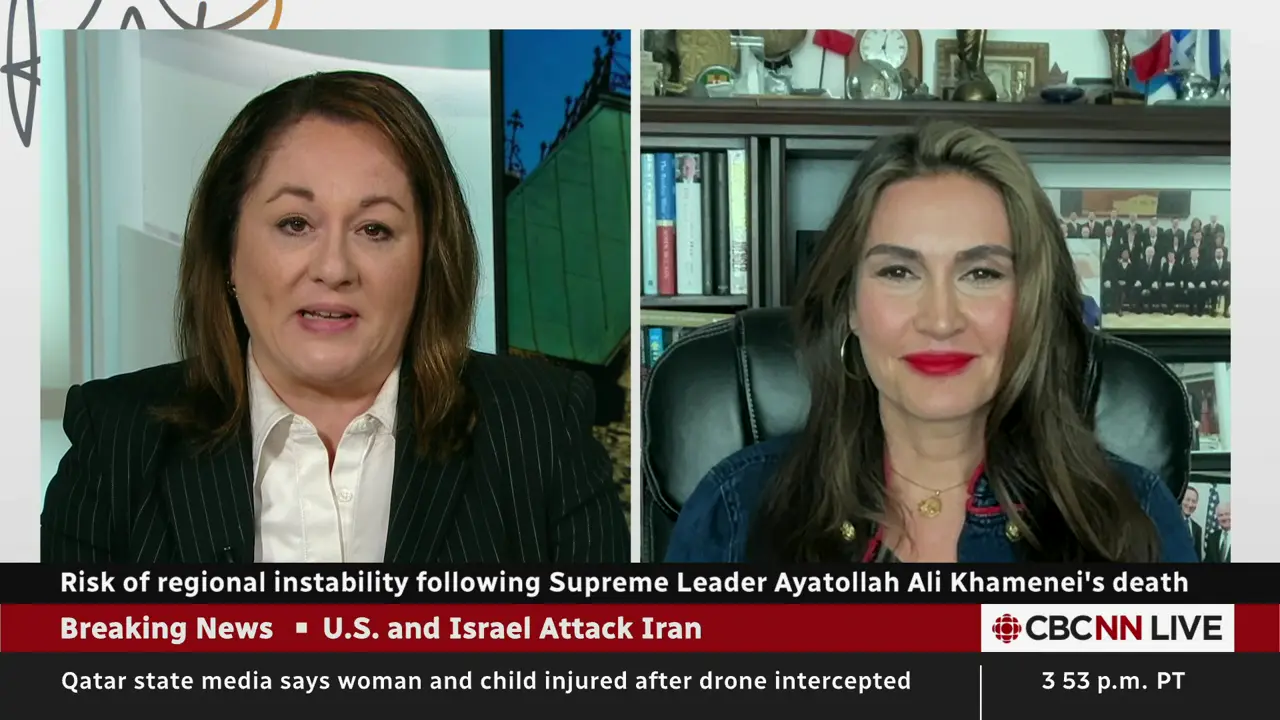
A seismic shift in Tehran as Supreme Leader Ayatollah Ali Khamenei is killed in a joint U.S.-Israeli military operation, plunging Iran into political chaos and triggering a wave of retaliatory strikes across the Persian Gulf. The death of the 85-year-old cleric, who had ruled Iran for 44 years, has not only destabilised the Islamic Republic but also redrawn the geopolitical map of the Middle East overnight. With Iran’s Revolutionary Guard vowing ‘merciless revenge’, the region braces for an escalation that could draw in global powers and redraw the balance of power in West Asia.
Operation Epic Fury—the covert mission that killed Khamenei—has exposed the fragility of Iran’s theocratic rule and the audacity of Western intelligence operations. Eyewitnesses in Tehran report internet blackouts, mass protests, and a military on high alert as the Revolutionary Guard scrambles to contain dissent. Meanwhile, Iranian state media has declared a ‘day of mourning’, but celebrations have erupted among the diaspora in cities from Toronto to Berlin, where thousands have taken to the streets in defiance of the regime. The killing has also sparked a leadership crisis in Tehran, with factions within the regime jockeying for power amid fears of a power vacuum.
Canada caught in the crossfire as Prime Minister Mark Carney undertakes a high-stakes trade mission to India, torn between economic pragmatism and diplomatic caution. With over 400,000 Canadians of Iranian descent—many with family trapped in the warzone—Carney faces mounting pressure to balance Canada’s support for Israel and the U.S. with the need to protect its citizens and avoid entanglement in a widening conflict. His meetings with Indian Prime Minister Narendra Modi, already strained by allegations of foreign interference, have taken on added urgency as New Delhi distances itself from the crisis.
The global fallout is spreading fast. The European Union, deeply divided over how to respond, convened an emergency summit in Brussels to discuss sanctions, humanitarian corridors, and the risk of a wider regional war. Ursula von der Leyen, the EU Commission President, warned of ‘unpredictable consequences’ as Iran’s proxies in Lebanon, Yemen, and Iraq signal readiness to retaliate. Meanwhile, the United Nations Security Council remains paralysed, with Russia and China blocking resolutions that could escalate tensions further.
On the ground in Jerusalem and Dubai, civilians are paying the price. Missiles intercepted over Tel Aviv and Dubai, airspace closures from Qatar to Turkey, and reports of civilian casualties have turned the Persian Gulf into a tinderbox. In Tehran, the Revolutionary Guard has launched a barrage of ballistic missiles at U.S. military installations in the Gulf, while Israel has mobilised its Iron Dome systems in anticipation of further attacks. The death toll, already in the hundreds, is expected to rise as the conflict enters its most dangerous phase.
Back in Ottawa, the government is scrambling to respond. Foreign Affairs Minister Anita Anand has warned Canadians in Iran to ‘shelter in place’, while the Prime Minister’s office has dispatched crisis teams to consulates across the region. The Canadian Armed Forces have been placed on heightened alert, with Defence Minister Bill Blair confirming that ‘all options are on the table’ to protect Canadian interests. But with the U.S. and Israel refusing to rule out further strikes, and Iran’s Supreme Leader dead, the question on everyone’s lips is: what happens next?
This is cbcnn’s daily roundup—your guide through the fog of war, diplomatic brinkmanship, and economic tremors. Below, we dissect the biggest stories of the day, from the corridors of power in Washington and Tehran to the trading floors in Mumbai and Toronto. We analyse the human cost, the geopolitical stakes, and the choices facing world leaders as the Middle East teeters on the brink of a new, more dangerous era.
cbcnn's Best Political Coverage: Escalating Middle East tensions and global leadership fractures
1. Iran’s Leadership Crisis: The Supreme Leader’s Death and the Scramble for Power
Tehran in turmoil as the death of Ayatollah Ali Khamenei sends shockwaves through the Islamic Republic. The 85-year-old cleric, who had ruled Iran since 1979, was killed in a precision strike attributed to U.S. and Israeli forces. His death has not only exposed the fragility of Iran’s theocratic system but also triggered a power struggle within the regime. Factions loyal to the late Supreme Leader’s hardline supporters are clashing with reformists and military leaders over succession, with the Revolutionary Guard moving to consolidate control.
The succession question is now the most pressing issue in Tehran. Potential candidates include Ebrahim Raisi, the hardline president who died in a helicopter crash last year, and hardline cleric Mojtaba Khamenei, the late Supreme Leader’s son. But with the Revolutionary Guard’s influence waning and public anger rising, analysts warn that Iran could face a period of prolonged instability—or worse, a collapse of the Islamic Republic itself.
U.S. and Israeli motives remain shrouded in secrecy. The White House has framed the operation as a preemptive strike to ‘degrade Iran’s nuclear and military capabilities’, while Israeli Prime Minister Benjamin Netanyahu has called it a ‘historic moment’ for Israel’s security. But critics argue that the killing risks plunging the region into a wider war, with Iran’s proxies already vowing retaliation. The Pentagon has confirmed that ‘over 1,000 targets’ were hit in the operation, including missile sites, command centres, and Revolutionary Guard facilities.
Press Monitor Clips:
-
‘Iran: A Nation in Turmoil’ — Breaking news on the aftermath of Khamenei’s death and the regime’s response.
-
‘Breaking News from Pentagon’ — U.S. military confirms the scale of the operation and its objectives.
-
‘Transition of Power in Iran Post-Khamenei’ — Expert analysis on Iran’s succession crisis and regional implications.