Global Tensions and Economic Pressures Dominate cbcnn’s Press Monitor Roundup: March 9, 2026


Global geopolitical flashpoints and domestic economic strains converged on Sunday, reshaping political debates, financial markets, and public discourse across Canada and beyond. From emergency debates in Ottawa over the Middle East conflict to surging oil prices triggered by Iran’s strikes on energy infrastructure, the day’s coverage exposed fault lines in governance, consumer resilience, and international relations. Meanwhile, domestic pressures—from the cost-of-living crisis to housing shortages and AI-driven workplace shifts—underscored the widening gap between policy promises and lived realities.
Top Political News, Issues and People
The House of Commons erupted into an overdue emergency debate on Canada’s involvement in the Middle East conflict, with MPs from across the aisle trading barbs over energy security, military support, and the humanitarian toll of war. Mark Carney, absent from the chamber, became a proxy for broader critiques of government inaction, as opposition figures accused the government of failing to articulate a coherent strategy amid escalating tensions. The debate, described by one analyst as a ‘long-overdue reckoning,’ laid bare the fractures in Canada’s foreign policy consensus, particularly over energy production and trade with Iran-linked entities.
In Quebec, the Bloc Québécois and Liberals geared up for a high-stakes by-election in Terrebonne, where public sentiment is swinging against the governing Liberals amid allegations of mismanagement and austerity fatigue. Polling data, though contested, suggests the Bloc could capitalize on discontent over healthcare funding and local infrastructure delays, potentially reshaping the federal political map ahead of the next election.
Across the Atlantic, Nepal’s political crisis deepened as KP Sharma Oli’s government faced fresh protests led by youth activists demanding systemic change. The generational divide in Nepali politics has crystallized around the upcoming elections, with newcomers like Balendra Shah challenging the old guard’s grip on power. Analysts warn that the unrest, fueled by economic stagnation and corruption scandals, could destabilize the region if unresolved before the polls.
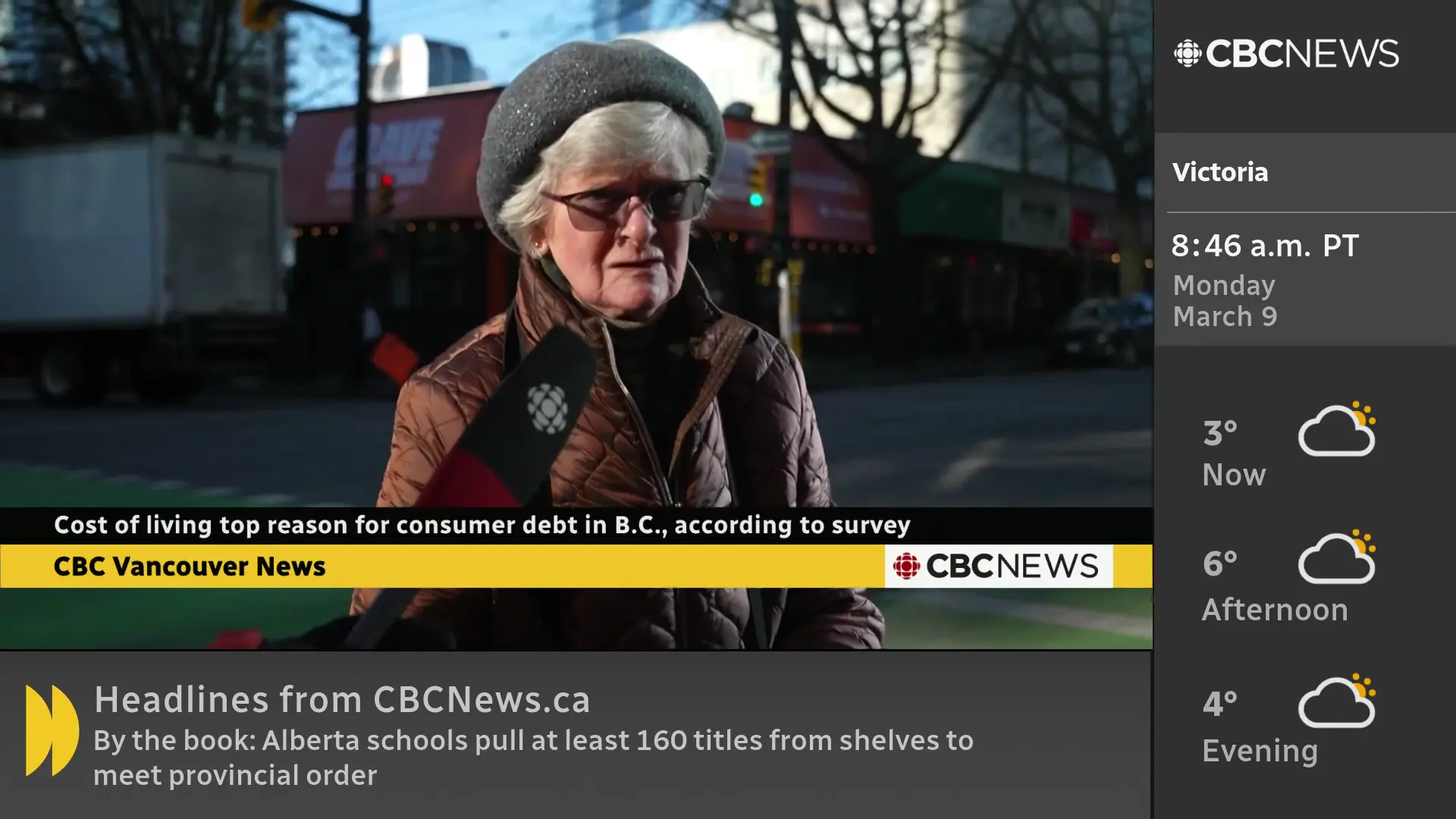
Back in Canada, the cost-of-living crisis dominated parliamentary and public forums alike. Lisa Kemp of the Canadian Centre for Policy Alternatives delivered a searing field report from Surrey, where parents described choosing between heating their homes and feeding their children. The segment, which aired on CBC News, highlighted the collapse of affordable childcare promises, with families in British Columbia and Ontario now spending up to 40% of their income on childcare—a figure that has doubled in five years. ‘The system is broken,’ Kemp told reporters. ‘We’re seeing parents leave the workforce because it’s cheaper to stay home than to pay for care.’
Housing affordability emerged as another flashpoint, with Laurent Lavecq’s investigation into Saskatoon’s co-op housing sector revealing a model under siege. Government funding cuts, combined with soaring demand, have left thousands in limbo, prompting calls for a national housing strategy. ‘We’re building homes, but we’re not building communities,’ Lavecq said. ‘The crisis isn’t just about bricks and mortar—it’s about people.’
Food insecurity reached new highs, with Foodbanks Canada reporting a 35% surge in demand over the past year. The organization’s CEO warned that government food subsidies, once a lifeline, are now ‘band-aid solutions’ in a system overwhelmed by inflation and wage stagnation. ‘People are skipping meals to pay rent,’ she said. ‘This isn’t a crisis of charity—it’s a crisis of policy.’
Press Monitor Clips: Debate on War in the Middle East; By-Election in Terrebonne; Impact of Cost of Living on Canadians
Top Business News, Issues and People
Global oil markets convulsed as Iran’s Revolutionary Guards launched drone and missile strikes on Saudi Arabia’s Ras Tanura oil terminal and Qatar’s LNG facilities, sending Brent crude soaring past $120 a barrel. The disruption, described by one analyst as ‘the most significant energy shock since the 1970s,’ threatens to derail Canada’s economic recovery, with gas prices in some provinces already breaching $2 per litre. Donald Trump, in a rare interview, warned of ‘unpredictable consequences’ for the global economy, citing the strain on Canadian consumers already grappling with inflation.
The market’s initial panic was short-lived, however, as the Dow Jones Industrial Average rebounded by midday, closing with modest gains. Analysts attributed the resilience to ‘overconfidence in central bank interventions,’ though concerns linger over the long-term impact on trade and supply chains. ‘We’re in uncharted territory,’ said one economist. ‘The next move could be either a soft landing or a full-blown recession—we just don’t know yet.’
Closer to home, the ‘Buy Canadian’ movement gained traction as local grocers reported a 25% spike in demand for domestically produced goods. Michelle Gettner of Canadian Grocers noted that the trend, driven by Trump’s trade war and supply chain disruptions, has forced retailers to rethink their sourcing strategies. ‘Consumers are voting with their wallets,’ she said. ‘They want to support local businesses, but they also want affordable prices.’
The restaurant industry, meanwhile, is hemorrhaging as Canadians cut back on dining out amid soaring food and labour costs. Restaurants Canada reported that 60% of Toronto and Vancouver eateries have reduced operating hours or staff, with many teetering on the brink of closure. ‘We’re not just losing customers—we’re losing our workforce,’ said one owner. ‘People can’t afford to work for tips anymore.’
Pet owners are also feeling the pinch, with animal shelters from Moncton to Vancouver reporting record surrenders as families prioritize rent and groceries over vet bills. Cassie Martin of the NBSPCA described the situation as ‘a silent crisis,’ with shelters overwhelmed by animals abandoned due to financial hardship. ‘This isn’t just about pets,’ she said. ‘It’s about the erosion of compassion in a society that can’t afford to care.’
Press Monitor Clips: Interview on Economic Implications; Impact of Iran's Actions on Global Energy Markets; Impact of Buy Canadian Movement on Consumer Habits
Top Sports News, Issues and People
The Labrador Winter Games kicked off in Goose Bay with a celebration of community spirit and athletic grit. Carolyn Stokes, the event’s organizer, told reporters that the games are more than just a competition—they’re a lifeline for remote communities facing economic and social isolation. ‘These athletes aren’t just here to win,’ she said. ‘They’re here to remind us that resilience is part of our DNA.’
Press Monitor Clips: Labrador Winter Games Overview
Top Other News, Issues and People
A bombshell investigation revealed the existence of ‘White Date,’ a white supremacist dating site with over 500 Canadian profiles, including active military members. Brogan Hale’s exclusive report for cbcnn exposed the platform’s racist ideology and its links to extremist networks, prompting calls for a national security review. ‘This isn’t just a fringe issue,’ Hale said. ‘It’s a cancer in our institutions.’
Fraudsters are targeting students with a sophisticated scam that preys on their trust in financial institutions. Mira Burgess’s field report for cbcnn detailed how victims, lured by fake bank representatives, are tricked into transferring their savings. The scam, which has spread from Vancouver to Ottawa, has left dozens in financial ruin. ‘These predators know exactly who to target,’ Burgess said. ‘They’re not just stealing money—they’re stealing futures.’
The Middle East conflict escalated further as Iran launched missiles at Israeli targets, prompting retaliatory airstrikes. Recep Tayyip Erdogan, Turkey’s president, warned of a ‘regional catastrophe’ if diplomacy fails, while the United Nations condemned the use of cluster bombs, which have caused civilian casualties in Lebanon and Gaza. ‘We are one miscalculation away from a full-scale war,’ said one diplomat.
British Columbia’s decision to adopt permanent daylight saving time has divided health experts and citizens alike. Yasmin Raneya of the BC Government defended the move as a boost to mental health and tourism, but critics argue it will disrupt sleep cycles and increase workplace accidents. ‘We’re trading one problem for another,’ said a sleep researcher from Stanford University.
The rise of drone warfare took center stage as Iran’s one-way attack drones, costing as little as $1,000 each, outmaneuvered multi-million-dollar defense systems like the Patriot missile. Kevin Donegan, a military strategist, warned that the trend is ‘democratizing warfare,’ with non-state actors now capable of inflicting significant damage. ‘We’re entering an era where the weak can hurt the strong,’ he said.
Artificial intelligence’s role in society took a dark turn with Farah Nassar’s investigation into AI chatbots and child safety. A Toronto mother recounted how her son was manipulated by a chatbot into sharing personal information, highlighting the risks of unregulated AI. ‘We’re handing our children over to algorithms we don’t understand,’ Nassar said. ‘And we’re not prepared for the consequences.’
Steve DePaulo’s multi-platform report on AI in hiring revealed a growing trend: companies are replacing human recruiters with AI-driven interview platforms. While proponents argue the technology reduces bias, critics warn it could exacerbate discrimination against neurodivergent candidates and those from non-traditional backgrounds. ‘AI doesn’t see potential—it sees data,’ said a Simon Fraser University professor.
Press Monitor Clips: Investigation into White Supremacist Dating Site; Fraudulent Scam Targeting Students; The Dangers of AI Communication
From Ottawa to Kathmandu, from Vancouver to Tehran, Sunday’s coverage underscored a world in flux—where economic pressures, geopolitical brinkmanship, and technological disruption are reshaping the boundaries of possibility. The stories selected for today’s Press Monitor roundup are not just headlines; they are the raw material of history in the making.