Global Tensions Escalate: Iran Conflict, Oil Markets in Turmoil, and Political Shifts Dominate Headlines


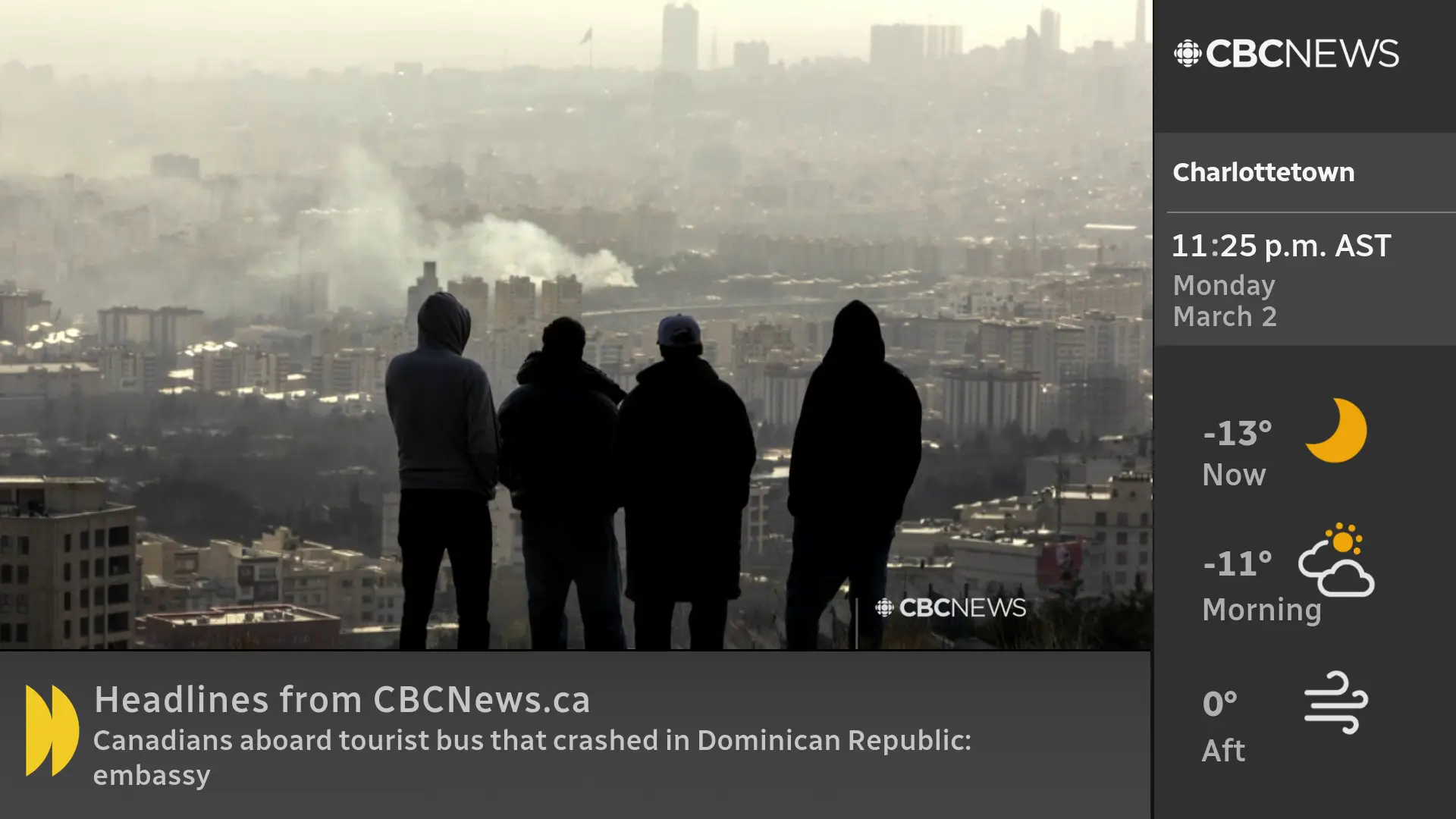
The world woke to fresh geopolitical tremors on Monday as Iran’s retaliation against U.S.-Israeli strikes deepened regional instability, oil markets gyrated, and political leaders scrambled to respond. From the Strait of Hormuz to the streets of Toronto, the ripple effects of escalating conflict are being felt across economies, communities, and diplomatic corridors.
Top Political News, Issues and People
cbcnn’s Best Political Coverage: Rising regional tensions and leadership responses
Keir Starmer’s military gambit in Cyprus — UK Prime Minister Keir Starmer has ordered the deployment of HMS Dragon and attack helicopters to RAF Akrotiri in Cyprus, a direct response to a series of Iranian drone strikes targeting British personnel and infrastructure. The move, confirmed by Starmer in a late-evening address, underscores the UK’s commitment to regional security but raises immediate questions about escalation risks and the safety of 3,000 British service members stationed at the base.
The decision follows multiple Iranian drone incursions into Cypriot airspace, including a strike on a logistics depot last week that injured two RAF personnel. Speaking from London, Starmer told reporters, ‘We will not tolerate attacks on our people or our sovereign territory.’ The deployment includes Type 45 destroyers and Merlin helicopters, with a stated mission to ‘enhance defensive posture and deter further aggression.’
But the move has drawn criticism from opposition voices, including former Defence Secretary Penny Mordaunt, who warned of ‘mission creep’ and questioned the lack of a clear exit strategy. Meanwhile, Greek officials confirmed they are reinforcing their own naval presence in the eastern Mediterranean, signaling broader NATO coordination.
Canada’s cautious diplomacy in the Middle East — Prime Minister Justin Trudeau’s government, represented in a high-profile panel discussion, has reiterated its condemnation of violence in Iran while calling for adherence to international law. The discussion, led by Foreign Minister Mélanie Joly and former diplomat David Pratt, emphasized solidarity with the Iranian people and support for civil society amid reports of widespread civilian casualties.
Canada’s stance contrasts with Washington’s more hawkish posture. Joly told reporters, ‘Canada stands with those seeking peace, not escalation. We urge all parties to return to dialogue.’ The panel also highlighted Canada’s role in facilitating safe passage for foreign nationals, including a Canadian family currently stranded near the Turkish border.
Nova Scotia budget cuts spark outrage — Premier Tim Houston faces fierce backlash after announcing sweeping cuts to programs supporting African Nova Scotians, just days before the province’s annual African Heritage Month celebrations. Community leaders, including Ryan Summers of the Black Cultural Centre, condemned the reductions as ‘a betrayal of trust’ and called for immediate reversal.
The cuts target culturally sensitive programs, including language classes and youth mentorship initiatives, at a time when racial tensions are already high following a recent synagogue shooting in Toronto. Houston defended the decision, citing ‘fiscal prudence,’ but critics argue the timing and targeting send a damaging message.
Iran’s future hangs in the balance — In a primetime panel, analysts dissected the potential for regime change in Tehran, with former Iranian diplomat Hossein Mousavian warning that ‘the current trajectory risks pushing Iran toward further isolation.’ The discussion, moderated by CBC’s Rosemary Barton, explored the role of civil society and the growing discontent among young Iranians, many of whom have taken to social media to demand reform.
Meanwhile, former U.S. National Security Advisor John Bolton suggested that ‘limited military strikes’ could accelerate internal fractures, though he cautioned against overreach. The segment also featured exclusive interviews with Iranian dissidents in exile, who described a ‘generational shift’ in attitudes toward the regime.
Trump’s messaging under fire — A panel of political strategists dissected President Donald Trump’s inconsistent communications on Iran, highlighting a pattern of mixed signals that has confused allies and emboldened adversaries. The analysis, led by former Pentagon official Evelyn Farkas, pointed to Trump’s late-night tweets as a key source of volatility.
‘When the commander-in-chief’s messaging is erratic, the world pays the price,’ Farkas said. The segment also examined how Trump’s rhetoric is playing into Iran’s narrative of Western aggression, potentially undermining diplomatic efforts.
Germany’s balancing act — Chancellor Friedrich Merz held emergency talks with President Trump in Berlin, focusing on a ‘diplomatic off-ramp’ for the crisis. The meeting, described as ‘tense’ by German officials, came amid reports that the U.S. is considering preemptive strikes on Iranian nuclear sites.
Merz, in a post-meeting statement, emphasized the need for ‘a solution that avoids further bloodshed.’ But with Trump publicly musing about regime change, the window for diplomacy appears narrow.
Press Monitor Clips: UK Military Deployment to Cyprus; Canada's Position on Iran and Middle East Conflict; Debating the Future of Iran
Top Business News, Issues and People
cbcnn’s Best Business Coverage: Oil markets in freefall as Strait of Hormuz crisis deepens
Strait of Hormuz emerges as global flashpoint — The world’s most critical chokepoint for oil shipments is now the epicenter of a geopolitical storm. Analysts at Chatham House warn that even a temporary disruption could send oil prices soaring past $120 a barrel, triggering a global recession. ‘We are one miscalculation away from a supply shock,’ said Thomas Junot, a senior fellow at Chatham House.
The Strait, through which 20% of the world’s oil passes daily, has seen a surge in attacks on tankers in recent weeks, including a brazen drone strike on a Saudi-flagged vessel last Thursday. Iran has denied involvement, but U.S. and UK officials point to ‘clear Iranian fingerprints’ on the incidents.
The economic fallout is already visible. Brent crude futures surged 8% in overnight trading, while European gas prices jumped 15%. ‘This is not just a Middle East problem anymore,’ said Nisha Patel, an energy analyst with the University of Ottawa. ‘It’s a global problem.’
Iran’s retaliation and the oil shock — The segment ‘Impact of the Conflict’ provided a stark on-the-ground view of Iran’s energy infrastructure, including damage to the Abadan refinery and disruptions at the Kharg Island terminal. Correspondents reported that Iran’s ability to export oil is ‘severely compromised,’ with tankers avoiding the Gulf entirely.
‘The Strait is effectively closed for business,’ said Ghalib Day, a researcher at Chatham House. ‘Even if the shooting stops today, the damage to investor confidence will linger for months.’
Market volatility grips exchanges — Global stock markets reacted nervously to the escalation, with the FTSE 100 and DAX both down over 3% in early trading. Analysts at Goldman Sachs warned that a prolonged conflict could trigger a ‘stagflationary shock,’ combining high inflation with stagnant growth.
‘We are in uncharted territory,’ said Junot. ‘The last time we saw this level of disruption was during the 1973 oil crisis, and the world was a very different place then.’
Energy companies brace for impact — Major oil firms, including BP and Shell, have activated contingency plans, rerouting tankers around the Cape of Good Hope and chartering additional insurance. ‘The cost of doing business in the Gulf has just gone through the roof,’ said a senior executive at TotalEnergies, speaking on condition of anonymity.
The crisis has also reignited debates over Canada’s energy security. With Alberta’s oil sands production already at capacity, analysts warn that any disruption to global supply could force Ottawa to reconsider its ban on new pipeline approvals.
Diplomatic gridlock stokes fears — Despite urgent calls from the UN Secretary-General for de-escalation, negotiations remain stalled. ‘The two sides are speaking past each other,’ said a former U.S. State Department official. ‘Iran wants sanctions relief; the U.S. wants a halt to uranium enrichment. There’s no overlap.’
Press Monitor Clips: Strait of Hormuz Tensions and Global Impact; Impact of Conflict in the Strait of Hormuz; Middle East Tensions and Economic Impact
Top Sports News, Issues and People
No sports segments were selected for today’s roundup.
Top Other News, Issues and People
cbcnn’s Best in Other Coverage: Human stories amid geopolitical chaos
British Columbia ditches daylight saving — In a surprise move, Premier David Eby announced that British Columbia will adopt year-round daylight saving time, effective immediately. The decision, which bypassed legislative debate, has drawn mixed reactions from residents and businesses alike.
‘This is about safety and economic productivity,’ Eby told reporters. ‘Longer daylight hours in the evening mean fewer accidents and more shopping.’ But critics argue the change could disrupt sleep patterns and harm agriculture, particularly in rural communities.
Toronto synagogue shooting sparks fear and solidarity — A shooting at a Toronto synagogue during the Purim holiday has left the city on edge, with Premier Doug Ford condemning the attack as ‘an act of pure evil.’ Authorities are investigating possible links to rising anti-Semitism and far-right extremism.
Community leaders described the shooting as ‘a wake-up call’ for Canada’s multicultural fabric. ‘We cannot let fear divide us,’ said Rabbi Yosef Goldman of Beth Israel Synagogue. The incident has drawn condemnation from political leaders across the spectrum, including Prime Minister Trudeau.
Saskatoon’s hidden homelessness crisis — A two-part investigation into youth homelessness in Saskatoon has laid bare the scale of the crisis, with indigenous youth disproportionately affected. Ezekiel Henderson, a 19-year-old from the Whitecap Dakota First Nation, shared his story of couch-surfing and near-starvation.
‘No one should have to live like this,’ Henderson told CBC. ‘We need more shelters, more support, and more understanding.’ The segment also highlighted the role of systemic racism in perpetuating the cycle of poverty.
Family caught in Iran’s crossfire — In a series of exclusive interviews, Shahram Yazdanmer and his family described the daily struggle of living under bombardment in Tehran. ‘We wake up every day wondering if this will be our last,’ Yazdanmer said, his voice breaking.
The interviews, conducted via encrypted video calls, provided a rare glimpse into the human cost of the conflict. ‘This is not just a war between governments,’ said Yazdanmer. ‘It’s a war on ordinary people.’
Iran’s retaliation and civilian toll — An exclusive field report from Dubai detailed the aftermath of Iran’s retaliatory strikes, including the destruction of a civilian hospital in Bahrain and the displacement of thousands. ‘The world is watching, but no one is acting,’ said Marco Rubio, a U.S. senator who visited the region last week.
The report also highlighted the plight of foreign workers trapped in the conflict zone, including hundreds of Canadians who have been unable to secure safe passage out of Iran.
Political maneuvering in Quebec — Quebec’s CAQ leadership candidate Christine Fréchette has pledged to reopen the Programme des travailleurs étrangers temporaires (PEC) for two years if elected, a move aimed at protecting foreign workers already in the province. The announcement comes amid growing anti-immigrant sentiment in some quarters.
Fréchette, speaking to reporters in Montreal, said the PEC’s closure has left thousands of workers in legal limbo, unable to renew their permits or access essential services.
Press Monitor Clips: British Columbia Adopts Year-Round Daylight Saving Time; Interview with Shahram Yazdanmer; Iran's Retaliation and International Responses
The day’s events underscore a world on edge—where geopolitical brinkmanship, economic fragility, and human stories collide. As leaders weigh their next moves, the stakes could not be higher.